Meadow Hay vs Timothy Hay for Rabbits
Timothy hay is a single-grass hay with steady fiber and predictable quality. Meadow hay is a mix of several grasses, so it varies by batch. Both work for adult rabbits. Timothy suits most guardians as the base. Meadow hay adds variety that keeps picky eaters interested.
You’re standing in the pet aisle with two bags of hay. Neither label tells you which one your rabbit will eat. I’ve been there many times, usually with a rescue rabbit who ignored last week’s bag.
The stakes are real. Rabbit guts need fiber moving through them all day. A rabbit that stops eating hay can slip toward an emergency vet visit fast.
What is the difference between meadow hay and timothy hay?
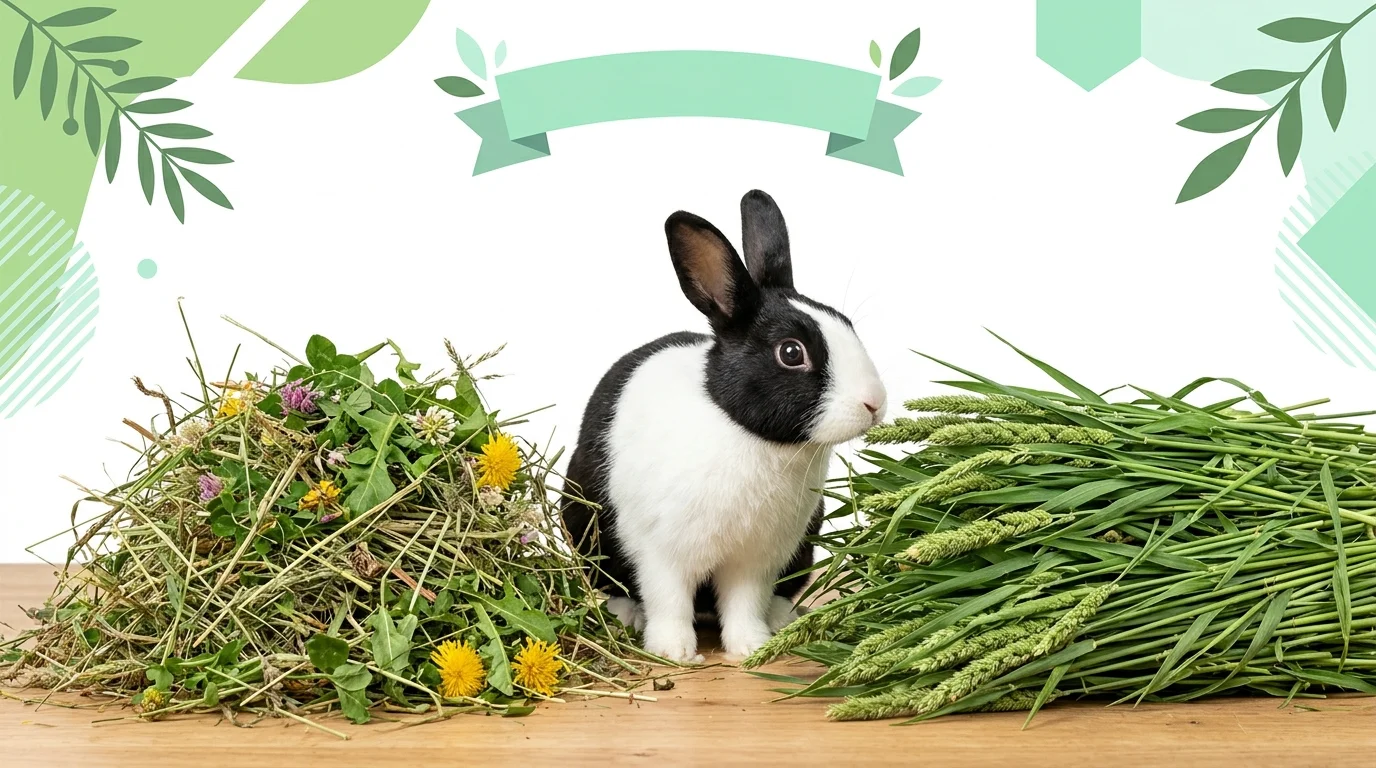
Timothy hay comes from one grass species, which gives you consistent texture and fiber from bag to bag. Meadow hay comes from a mixed field, so each bag holds several grasses and sometimes small wildflowers. The difference matters because consistency helps you spot problems, while variety helps you keep a fussy rabbit eating.
Timothy hay is a tall, coarse grass hay. Growers cut it more than once a season, and each cut feels different. First cut is stemmy and high in fiber. Later cuts are leafier and softer.
Meadow hay has no fixed recipe. A farm might pack orchard grass, ryegrass, fescue and meadow flowers into one bale. That mix explains why one bag smells different from the next.
The House Rabbit Society advises unlimited grass hay for adult rabbits. Both of these hays qualify.
Nutrition and fiber compared
Both hays are high in fiber and low in protein and calcium compared with alfalfa. Timothy tends to run more consistent because it is one species. Meadow hay’s numbers shift with the mix of grasses, the cutting date and the field. Check the bag label, since no two meadow batches match exactly.
| Feature | Timothy hay | Meadow hay |
|---|---|---|
| Grass makeup | One species | Several species, varies by field |
| Fiber | High | High, varies by mix |
| Batch-to-batch consistency | High | Lower |
| Texture | Coarse and stemmy to soft, depending on cut | Mixed, often softer |
| Best use | Daily base hay | Variety and picky eaters |
| Availability | Widely sold | Sold less often, depends on region |
I won’t hand you protein percentages here. Those figures change with every harvest, and a retailer’s label is vendor-reported. Ask the producer for a forage analysis if you want exact numbers.
For most adult rabbits, the nutrition gap between a clean grass hay and a clean meadow hay is small. The gap between fresh hay and stale hay is much larger.
Which hay is better for rabbit teeth and digestion?
Neither hay wins outright. Both give the long, coarse fiber that wears rabbit teeth evenly and keeps the gut moving. Timothy gives you a predictable baseline. Meadow hay can match it when the bag is mostly grass and fresh. Quality, freshness and quantity matter more than the name on the label.
Rabbit teeth never stop growing. Chewing stemmy hay grinds them down in a sideways motion. Soft, short or dusty hay skips that work.
Digestion follows the same logic. Fiber keeps food moving through the gut. When a rabbit eats too little hay, gut movement can slow.
That slowdown is called gut stasis, and it is a serious emergency. Call your exotics vet right away if your rabbit stops eating or stops pooping.
What I saw feeding both in rescue rabbits
In my fostering work, timothy hay made the best daily base. Meadow hay made the best rotation. Rabbits that rejected one often accepted the other. Meadow hay won over my pickiest eaters. Timothy gave me cleaner readings on appetite and droppings.
I’ve fostered and rehabilitated more than 500 rescue rabbits over 12 years. Many arrived thin, stressed and wary of everything in the bowl.
One rescue doe, whom I’ll call Maple, ignored timothy for a week. I mixed a handful of meadow hay into her pile. She ate it within the hour. Within days she was nibbling the timothy beside it.
The trade-off showed up later. One batch of meadow hay arrived full of seed heads and dust. Three foster rabbits sneezed for days until I threw it out. Since then I check every bag by smell and sight before it reaches a hutch.
Timothy’s consistency helped most when a rabbit got sick. If a rabbit ate her usual timothy and her droppings shrank, I knew the hay wasn’t the cause. With rotating meadow batches, that call is harder to make.
How do you choose good hay of either type?
Good hay smells fresh, feels dry and looks mostly green. Reject any bag that smells musty, looks gray or puffs out dust. Long, intact strands matter too. Pull a handful out before you buy when you can. Mold in hay can make a rabbit sick.
Use this quick check at the store or when a bag arrives.
- Smell it. Fresh hay smells sweet or grassy, and musty means mold.
- Look at the color. Green to pale gold is normal, and gray or black spots mean you should discard it.
- Check the strands. Long stems give your rabbit’s teeth real chewing work.
- Shake the bag. A heavy dust cloud points to lower quality.
- Read the cut date. Fresher hay holds more flavor and texture.
Store hay in a dry, ventilated spot. Sealed plastic traps moisture and invites mold. A cardboard box or a breathable bin works well.
Can you mix meadow hay and timothy hay?
Yes, you can mix them, and I recommend it for most adult rabbits. Offer timothy as the main pile and add meadow hay as a second handful. The mix adds scent and texture variety. It also protects you if one batch turns out poor.
Keep hay unlimited. I give each rabbit a daily pile about its own size and refill it whenever it runs low.
Young growing rabbits often eat alfalfa hay until they mature. Your exotics vet can tell you when to switch. If you share your home with a Holland Lop, our Holland Lop breed profile covers breed-specific feeding. Our guide to what rabbits can eat daily covers the rest of the plate.
How to switch hays without upsetting your rabbit’s gut
Switch hays over about a week by blending the new hay into the old one. Start with a small handful of new hay in the familiar pile. Raise the share each day. Watch droppings and appetite closely, since sudden changes can upset a rabbit’s gut.
Follow this schedule.
- On days 1 and 2, offer mostly the old hay with a small handful of the new.
- On days 3 and 4, offer equal parts.
- On days 5 and 6, make the new hay the larger share.
- On day 7, offer the new hay alone if droppings stay normal.
Go slower if your rabbit hesitates. Call your vet if droppings shrink, soften or stop. New to all of this? Start with our Rabbit Care 101 guide.
Meadow hay and timothy hay FAQ
Is meadow hay safe for rabbits?
Yes, clean meadow hay is safe for adult rabbits. It’s a grass hay with plenty of fiber. Avoid bags with mold, heavy dust or a musty smell. Check for sharp seed heads or unfamiliar plants too. If you’re unsure about a batch, ask your exotics vet before you feed it.
Is timothy hay better than meadow hay?
Timothy hay is the safer default because it’s consistent. Better depends on your rabbit. A picky eater may thrive on meadow hay. A rabbit with a sensitive gut may do better on steady timothy. Rotating both gives most adult rabbits the benefits of each.
How much hay should a rabbit eat each day?
Rabbits should have unlimited hay every day. Hay should make up most of an adult rabbit’s diet, according to House Rabbit Society guidance. Refill the pile whenever it runs low. Offer fresh hay at least once a day and remove soiled hay from the litter area.