How Long Can Rabbits Go Without Hay?
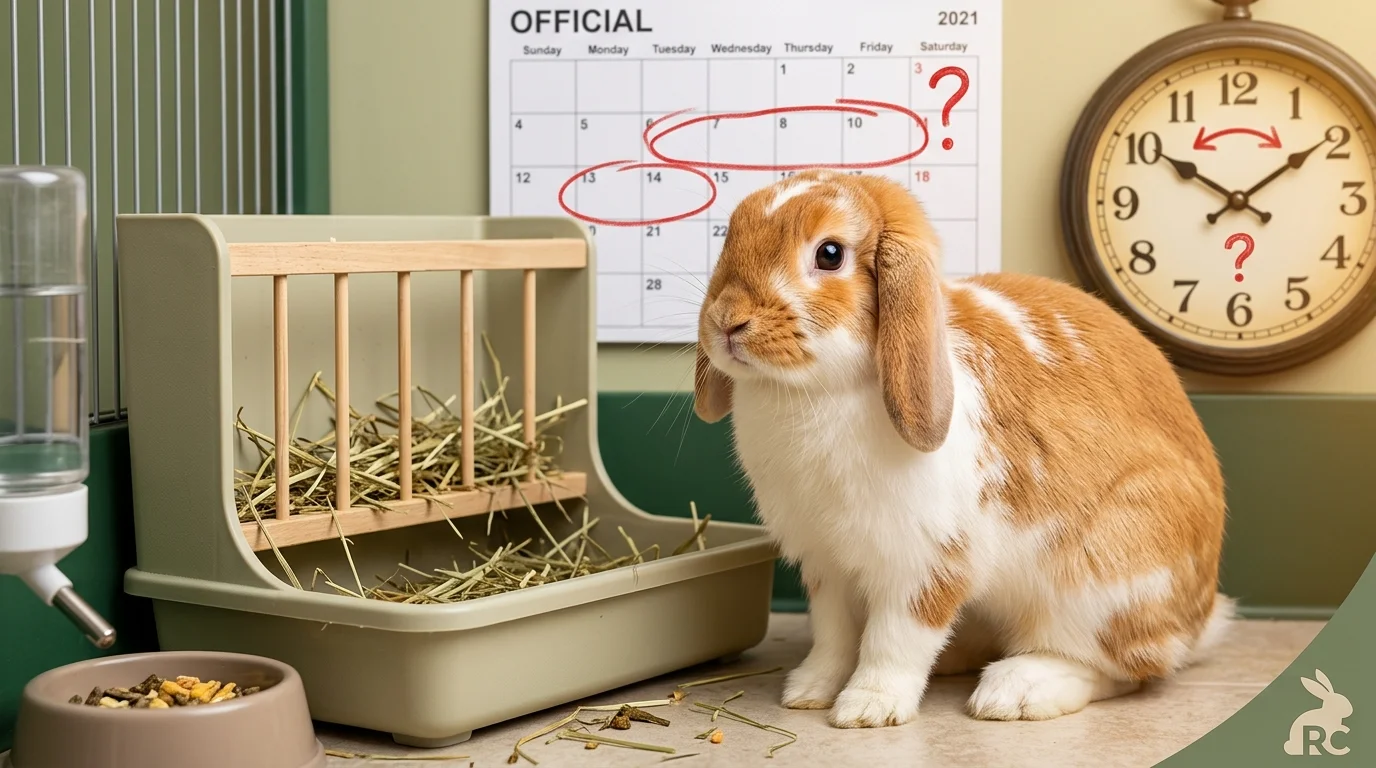
Rabbits shouldn’t go without hay at all. Their gut needs fiber around the clock to keep moving. A rabbit that skips hay for even a day risks a dangerous slowdown called gastrointestinal (GI) stasis. If your rabbit refuses hay and all other food, call your vet right away.
You’ve reached for the hay bag on a Sunday night and found it empty. Or you’ve watched your rabbit sniff the pile and walk away. Either way, you want a straight answer, so this guide gives you one.
How long can a rabbit safely go without hay?
No length of time is safe. Hay is the base of a rabbit’s diet, and the gut needs it every day. Even a short gap can slow digestion. If your rabbit goes a full day without hay, treat it as a problem and call your vet.
The House Rabbit Society recommends unlimited grass hay every day for adult rabbits. That advice exists because a rabbit’s gut never rests. Food has to keep moving through it.
I treat every hay gap as a warning. A rabbit that misses one hay meal but eats pellets and greens normally usually recovers fast. A rabbit that refuses hay and everything else is a different case. That rabbit needs a vet the same day.
Why does a rabbit’s gut need hay every day?
Hay supplies the long-strand fiber that pushes food through a rabbit’s digestive tract. Without it, the gut slows down. Gas and bacteria build up. Your rabbit feels pain and stops eating, which slows the gut even more.
Vets call this slowdown GI stasis. It starts small and builds on itself. Pain reduces appetite. Less food means less movement in the gut. Less movement means more pain.
Pellets and fresh greens can’t break that loop. Pellets pack in calories without the chewing and bulk that hay provides. Greens add moisture and nutrients but little long fiber. Only hay gives the gut the steady work it needs.
You’ll see the stakes fast. A rabbit with a slowing gut can go from quiet to critical in a short time. That speed is why I never advise a wait-and-see approach.
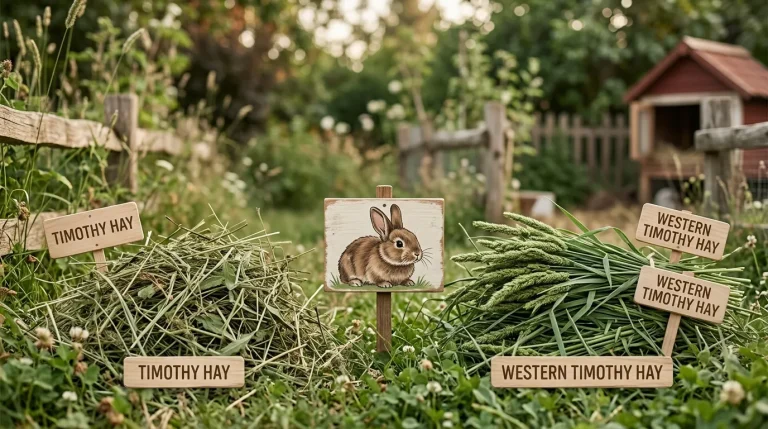
Timothy Hay vs Western Timothy Hay
How does hay protect your rabbit’s teeth?
A rabbit’s teeth never stop growing. Chewing hay grinds them down evenly, in a side-to-side motion. Without hay, the teeth overgrow and form sharp points. Those points cut the cheeks and tongue, and your rabbit eats less.
This creates a second loop alongside the gut problem. Sore teeth make chewing painful. A rabbit in pain skips hay. Skipping hay lets the teeth grow even longer.
Hay works because it demands so much chewing. A pellet crumbles in a few bites. A stem of timothy hay takes many more. That extra chewing keeps the teeth worn to a healthy length.
If your rabbit drops hay from its mouth or chews on one side only, tell your vet. Dental pain often hides behind a rabbit that simply looks picky.
What signs show a rabbit’s gut is slowing down?
Smaller or missing droppings are the earliest sign. A rabbit that stops eating, hunches in a corner or grinds its teeth in pain needs a vet fast. Don’t wait to see whether it passes by morning. Gut problems move quickly in rabbits.
Watch for these signs.
- Droppings that look smaller, drier or fewer than usual
- No droppings at all for several hours
- Refusing hay, pellets or favorite treats
- A hunched posture with the belly pressed to the floor
- Loud tooth grinding, which signals pain
- A tight or bloated belly
- Hiding and sitting very still
Check the litter box every morning. Droppings tell you more about your rabbit’s gut than anything else you can see. I look at them before I look at the rabbit.
Hay for Rabbits with Allergies: Safe Alternatives
What should you do if your rabbit won’t eat hay?
Call your vet the same day if your rabbit refuses hay and all other food. Don’t wait overnight. While you arrange care, keep your rabbit warm and quiet, and offer fresh hay and water. Never force-feed or give human medicine without direction from your vet.
Follow these steps while you wait for your appointment.
- Check the litter box and note the size and number of droppings.
- Offer fresh hay, clean water and a favorite leafy green.
- Call your vet and say your rabbit has stopped eating.
- Move your rabbit to a warm, quiet space.
- Write down when your rabbit last ate and last pooped.
That last note matters more than most guardians expect. Your vet will ask for it first. A clear timeline helps them decide how fast to act.
Why do rabbits stop eating hay?
Rabbits stop eating hay for four common reasons. Dental pain, stale hay, too many pellets and stress top the list. Illness sits behind many of these. Finding the cause tells you whether you can fix it at home or need a vet.
- Dental pain makes chewing hurt, so your rabbit avoids hay.
- Stale or dusty hay smells off, and rabbits refuse it.
- Too many pellets fill your rabbit up before hay gets a turn.
- Stress from a move, a new pet or loud noise can shut down appetite.
Hay quality surprises many guardians. Rabbits have a sharp sense of smell. Hay that sat in a damp corner or lost its fresh scent often goes untouched. Swap it for a fresh bag before you assume something is wrong with your rabbit.
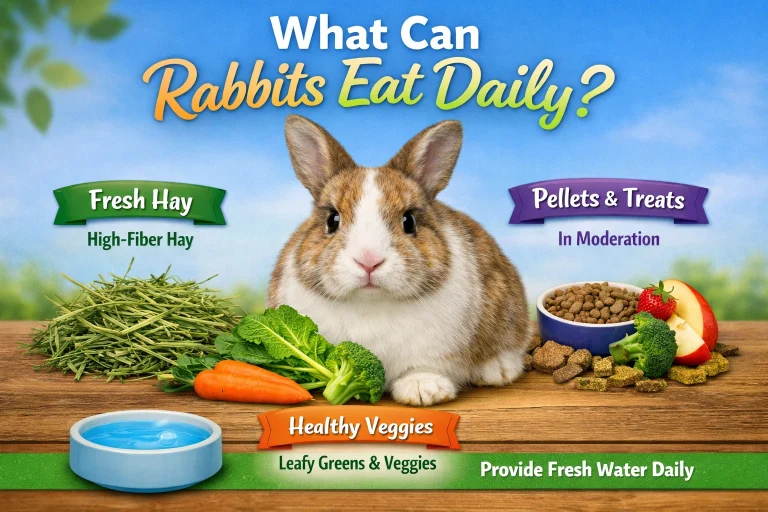
Pellet portions cause the quietest problem. Many guardians pour a full bowl each morning. The rabbit fills up on pellets and ignores the hay. Cutting the pellet portion back often brings the hay appetite back within days. Your vet can tell you the right amount for your rabbit’s weight and age. Our daily rabbit diet guide covers the full balance.
What have I seen in rescue about hay gaps?
In my years of fostering rescue rabbits, hay gaps rarely came from neglect. They came from surprises. A store sold out, a delivery arrived late or a rabbit turned picky overnight. The guardians who acted the same day saw the best recoveries.
I’ve fostered and rehabilitated more than 500 rescue rabbits. A pattern shows up again and again. Rabbits that arrive from homes feeding mostly pellets often have small droppings and sore mouths. They haven’t chewed enough hay in months.
I remember one doe who arrived like that. She sniffed the hay and turned away. We worked with our vet first. Then I introduced hay slowly, with several kinds to find one she liked. Within days, she was pulling stems from the pile on her own.
That experience taught me two lessons. First, a rabbit that refuses hay is telling you something hurts. Second, patience works better than pressure. I never force a rabbit to eat. I fix the cause and let the appetite return.
How do you keep hay on hand for emergencies?
Buy hay before you need it. Keep at least a week of spare hay in a dry, ventilated spot. Store it in a breathable box instead of a sealed bag. Check it for mold and dust before each feeding.
I keep a backup bag of hay in my own home at all times. When I transport foster rabbits, I pack hay first. A stressed rabbit in a carrier still needs something to chew.
Plan for travel and weather too. If a storm could close the roads, stock up early. If you leave your rabbit with a sitter, send more hay than you think the sitter needs. Write the hay amount on the care sheet.
You can also keep two types of hay on hand. Timothy and orchard grass both work well for adult rabbits. A second type gives you a backup when your rabbit gets bored with the first. Our Rabbit Care 101 guide lists the full supply checklist for new households.
Can fresh greens or pellets replace hay for a day?
Fresh greens and pellets can’t replace hay, even for one day. Greens add moisture and nutrients but little long fiber. Pellets add calories without the chewing hay demands. If you run short, offer extra leafy greens as a brief bridge and buy hay at once.
Treat that bridge as an emergency measure only. Your rabbit’s gut and teeth still need the fiber and the chewing. Don’t make the swap a habit.
Choose safe greens and introduce them with care. Our guide to veggies for Holland Lops lists options that work for most rabbits. Small breeds like the Holland Lop can have sensitive stomachs, so change foods slowly.
Quick answers about rabbits and hay
Can a rabbit go 24 hours without hay?
A rabbit shouldn’t. A full day without hay can slow the gut and start GI stasis. If your rabbit also refuses pellets and greens, call your vet at once. If it still eats other food, restore hay immediately and watch the droppings closely.
Can my rabbit live on pellets alone?
No. Pellets lack the long fiber a rabbit’s gut needs. They also don’t wear the teeth down the way hay does. Hay should make up the largest part of your rabbit’s diet every day.
How much hay should my rabbit get each day?
Your rabbit should have unlimited fresh hay at all times. The House Rabbit Society recommends this approach for adult rabbits. Refill the hay pile at least once a day, and swap out any damp or dusty hay.
Your next step
Check your hay supply today. If you have less than a week on hand, order more. Look at the litter box tomorrow morning and learn what normal droppings look like for your rabbit.
You don’t need to fear every skipped nibble. You do need to act fast when hay stops and appetite drops with it.