Timothy Hay vs Western Timothy Hay: What Really Differs?
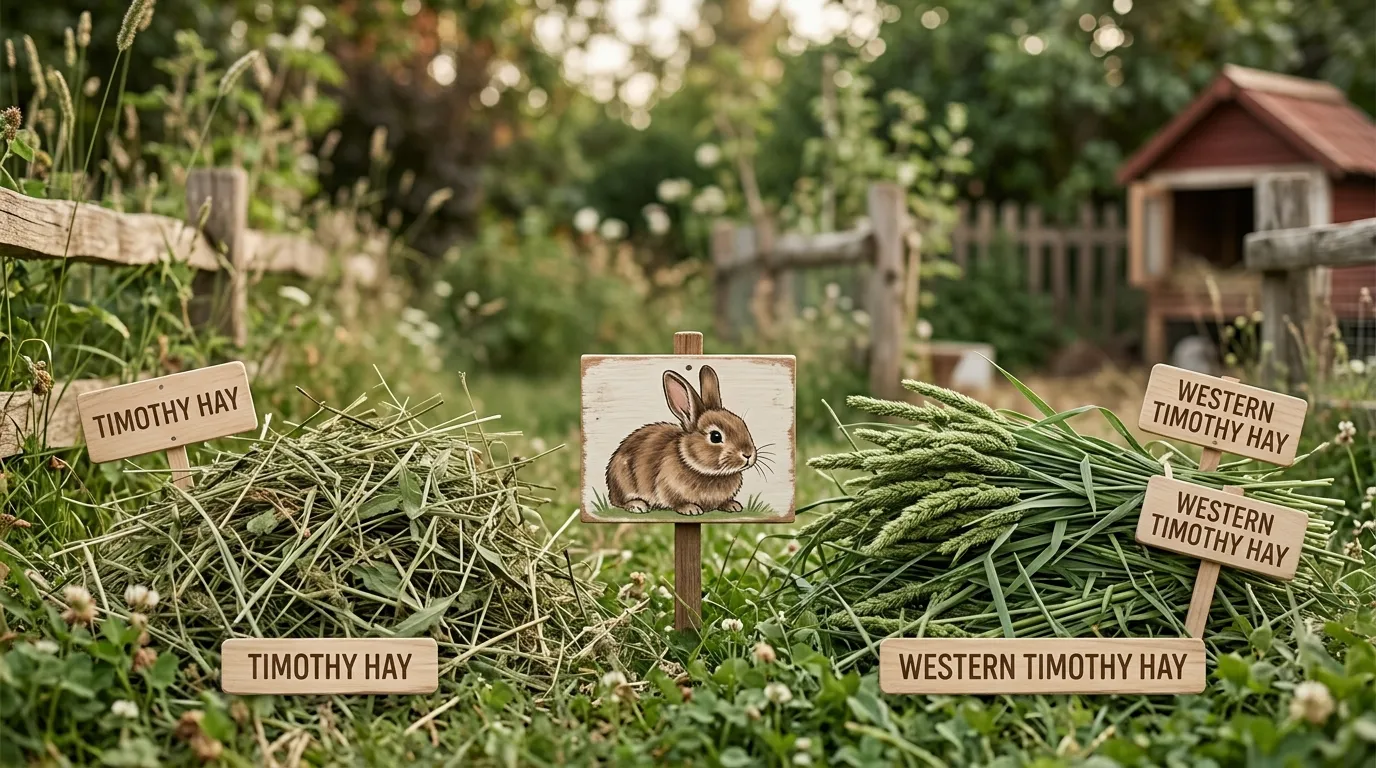
Timothy hay and western timothy hay come from the same grass, Phleum pratense. Western timothy grows in the dry western United States, so it often cures greener and cleaner. Regular timothy grows in many regions and varies more from bag to bag. Both can anchor your rabbit’s diet when they arrive fresh.
You’re standing in a feed store with two bags in your hands. One says timothy hay. The other says western timothy hay and costs more. You want to pick the right one and get home to your rabbit.
I’ve stood in that aisle many times. Over 12 years, I’ve fostered and rehabilitated more than 500 rescue rabbits, and hay was the first thing I bought for every one of them. This guide covers what the two labels mean and what to check before you pay. If you’re new to rabbits, start with our Rabbit Care 101 guide.
What is the difference between timothy hay and western timothy hay?
Western timothy hay is timothy grown in the arid western United States, usually under irrigation. Regular timothy is a broader label for the same grass grown anywhere. The species matches. Climate, cutting schedule and drying conditions change how the bale looks, smells and feels in your hands.

Timothy Hay for Rabbits
- Made with hand-selected Timothy hay for digestive health
- Contains prebiotics and probiotics
- Supports dental health through natural chewing
- No loose seeds or sugary fruits
- No artificial preservatives or fillers
- Backed by Kaytee’s 150+ years of small-animal nutrition expertise
The word “western” names a region. It doesn’t name a grade, a species or a special cut. Much of the western supply comes from states with dry summers, such as Washington, Oregon, Idaho and Utah.
Plain timothy makes no such promise. It can come from the Midwest, the East, Canada or a farm down the road. That range explains why quality swings more from bag to bag.
Early in my fostering years, I assumed the pricier label meant better nutrition. It doesn’t. I’ve since fed the same grass from both origins, and a bag’s freshness told me more than the word on the front.
Side-by-side comparison of regular and western timothy
Regular and western timothy share one nutrition base, since both are timothy grass. They differ in origin, color, consistency and cost. The table below compares them at a glance. Use it as a starting point, because any single bale can break the pattern.
| Feature | Regular timothy hay | Western timothy hay |
|---|---|---|
| Origin | Many regions, including local farms | Dry western states |
| Growing climate | Varies from humid to dry | Arid, mostly irrigated |
| Typical color | Green to brown, varies by bale | Often green to golden |
| Consistency | Changes more between bags | Often steadier between bags |
| Travel distance | Can be short | Often long |
| Price | Often lower | Often higher, partly from shipping |

Western Timothy Hay for Rabbits
- High-fiber hay. Timothy hay keeps your rabbit’s gut moving. Make it the base of every meal.
- Natural chewing. Long strands wear teeth down evenly
- Fresh and fragrant. Green, sweet-smelling hay tempts picky eaters.
- US family farms. Oxbow reports it selects this hay from its family of US farms (vendor-reported).
Best Hay for Rabbits with Allergies
How does climate change the hay?
Dry weather lets growers cut, cure and bale hay without rain soaking the field. Rain during curing causes mold and dull, brown stems. Western growers face this problem less often, so their bales tend to arrive greener and fresher smelling. Rainy regions can still produce excellent hay.
Hay dries in the field before baling. Irrigation lets western farmers water on a schedule and stop before the cut. That control explains the steadier look.
Humid regions can still win. A farm that cuts during a dry stretch and stores bales indoors can beat a western bag that sat in a hot warehouse.
Climate changes three things you can check yourself:
- Color, which fades toward brown when rain hits cut hay
- Smell, which turns musty when moisture gets trapped in the bale
- Consistency, which drops when a farm mixes fields or cuttings in one bag
Travel matters too. Western hay often crosses the country before it reaches you. Long trips and warehouse time can dull the sweet grassy smell.
More: What is the Best Hay for Holland Lop Rabbits?
What I’ve seen after feeding both to rescue rabbits
In my experience, rabbits accept both types equally once the hay is fresh. Freshness, cutting and smell drove their choices far more than the label. I’ve watched picky eaters ignore a premium bag and empty a plain one. Your rabbit’s nose makes the call.
One foster doe refused a pricey bag of western timothy. The bale looked perfect. It smelled flat, because it had sat in storage for months. She ate a local second cutting from a nearby farm within an hour.
That doe taught me to trust the nose over the label. I now open every new bag outdoors before it reaches a rabbit. One squeeze and one sniff tell me most of what I need.
I also switch hay slowly. A sudden change can upset a rabbit’s gut. Here’s my routine when I bring in a new bag:
- Mix a small handful of the new hay into the old hay on day one.
- Raise the new share a little each day over about a week.
- Check droppings each morning.
- Call your veterinarian if droppings turn small, dry or stop.
Gut slowdown moves fast in rabbits. A rabbit that stops eating hay for even a day needs a vet call. Don’t wait it out.
Does the cutting matter more than the region?
Yes, the cutting usually changes your rabbit’s experience more than the region does. First cutting runs coarse and stemmy. Second cutting runs softer and leafier. Third cutting runs finest and softest. Each cutting comes from western and regional farms alike. Texture drives how long your rabbit chews.
Here’s how I match cuttings to rabbits:
- First cutting suits healthy adults, since the stems give their teeth plenty of chewing work.
- Second cutting suits most households and picky eaters, since the leaves smell stronger.
- Third cutting suits rabbits that struggle with stems, such as seniors with worn teeth.
Senior rabbits who chew slowly often do better on softer second cutting, in my experience. I keep a mix on hand for my fosters. Some rabbits need stems, and some need leaves.
Many bags don’t state the cutting. Ask the seller. A shop that can’t answer that question probably can’t answer questions about freshness either.
Read more: 1st or 2nd Cut Timothy Hay
Which hay should you buy?
Buy the freshest timothy you can find, whatever its region. Pick western timothy if local hay arrives dusty, damp or uneven. Pick regional timothy if a nearby farm lets you inspect bales. Freshness beats geography every time. Your rabbit’s appetite will confirm the choice within a day.
Small breeds do well on either type. If you share a home with a Holland Lop, read our Holland Lop breed profile and our guide to veggies for Holland Lops. For the full daily menu, see what rabbits can eat daily.
Price should not decide this for you. A cheaper fresh bale beats an expensive stale one. Buy a small bag first, then commit to a large box once your rabbit approves.
How to check a bag before you buy
You can judge a bag in about a minute using your eyes and nose. Look for green to golden color, a sweet grassy smell and long, dry stems. Skip any bag with dust, mold spots or a musty odor. Those signs mean poor curing or long storage.
Run through this checklist at the shelf or on your porch:
- Open the bag and smell it. Fresh hay smells like cut grass.
- Look for color. Some brown is normal, but a whole bag of gray or black is not.
- Shake a handful over your palm. Heavy dust means poor handling.
- Feel a stem. It should snap dry, not bend limp and damp.
- Check for weeds, sticks and plastic. Clean bags contain grass only.
Store the hay in a cool, dry, breathable container. Airtight bins trap moisture and grow mold. I use a ventilated cardboard box and a dry shelf.
Timothy hay questions
Is western timothy hay better for rabbits?
Western timothy isn’t better by species, since both types are the same grass. It often arrives greener and more consistent because of the dry growing climate. A fresh regional bale can match it. Judge each bag by smell, color and dryness instead of by the region on the label.
Can I mix timothy hay and western timothy hay?
Yes, you can mix them. Both are timothy grass, so your rabbit’s gut sees the same plant. Many guardians blend bags to vary texture and smell. Introduce any new bag over about a week, and watch droppings for changes.
Should adult rabbits eat timothy hay every day?
Yes, adult rabbits should have unlimited grass hay every day. The House Rabbit Society’s diet guidance at rabbit.org places grass hay at the center of an adult rabbit’s diet. Timothy is a common choice. Constant chewing keeps the gut moving and wears teeth evenly.