Rabbit Care 101: Complete Beginner’s Guide
So, you are thinking about getting a rabbit? That is exciting! Rabbits are adorable. They have twitchy noses, soft ears, and big personalities. But, before you head to the shelter or breeder, we need to talk about reality.
Many people think rabbits are “starter pets.” They assume rabbits are easy, like a goldfish or a hamster. This is a myth.
Rabbit care involves much more than just putting carrots in a cage. In fact, rabbits require as much attention and care as a dog. They need specialized vets, specific diets, and a lot of space to run.
This guide is designed for first-time owners. Whether you are a single adult, a family with kids, or just curious, this article covers everything. We will walk through housing, diet, health, and behavior. By the end, you will know exactly what it takes to be a great rabbit parent.
Understanding Rabbits as Pets
Before we buy supplies, let’s understand the animal. Rabbits are unique creatures. They are prey animals, which means they think differently than predators like cats or dogs.
Are Rabbits Good Pets for Beginners?
Yes, rabbits can be amazing pets for beginners, if you do your research.
Temperament and Personality Every rabbit is different. Some are cuddly and love to sit on your lap. Others are independent and prefer to sit near you, not on you. Generally, rabbits are social, curious, and smart. They can learn their names. They can even learn tricks! However, they are also easily startled. Loud noises and sudden movements can terrify them.
Indoor vs. Outdoor Suitability Historically, people kept rabbits outside in hutches. Modern expert advice strongly recommends keeping rabbits indoors.
- Indoors: They are safe from predators, weather changes, and parasites. They become part of the family.
- Outdoors: They are at risk of heatstroke, flystrike, and predator attacks (even through the wire). An indoor rabbit is usually a happier, healthier rabbit.
Rabbit Lifespan and Commitment
This is the most surprising fact for new owners.
Average Lifespan A healthy indoor rabbit lives a long time. The average lifespan is 8 to 12 years. Some even live into their teens!
Long-term Responsibility Getting a rabbit is a decade-long commitment. You need to think ahead. Will you be going to college soon? Are you moving to an apartment that doesn’t allow pets? You must be ready to care for this bunny for its entire life.
Common Rabbit Breeds for Beginners
There are over 40 recognized rabbit breeds. Here are a few popular choices:
- Holland Lops: Small, floppy ears, and generally very sweet. They weigh about 3-4 lbs.
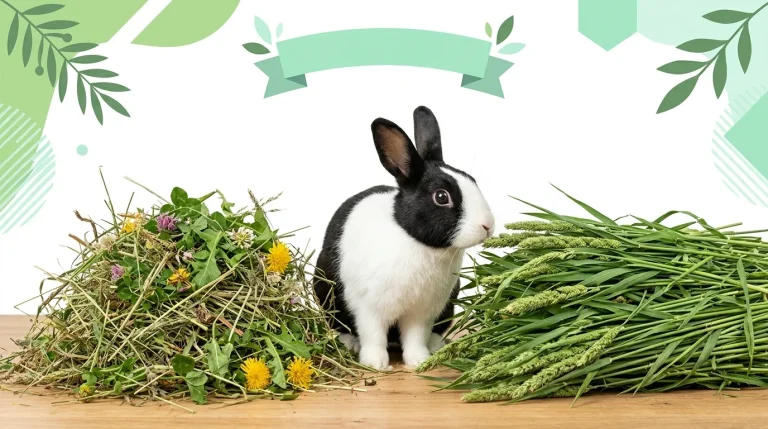
- Dutch Rabbits: Distinctive black and white markings. They are known for being calm and friendly.
- Mini Rex: Known for velvet-like fur. They are active and smart but can be high energy.
- Flemish Giants: These are huge (15+ lbs)! Ironically, they are often known as “gentle giants” and can be very chill, though they need massive space.
Holland Lop and Netherland Dwarf
Temperament-Based Selection Don’t just pick based on looks. Ask the shelter or breeder about the rabbit’s personality. An adult rabbit is often better for beginners because their personality is already settled.
Setting Up the Perfect Rabbit Habitat
Your rabbit needs a safe home base. This is where they sleep, eat, and use the bathroom.
Indoor vs Outdoor Rabbit Housing
Pros and Cons
- Indoor Living (Recommended):
- Pros: Closer bond with owner, temperature control, safety from predators, easier to spot health issues.
- Cons: Requires rabbit-proofing, potential for mess (hay/fur).
- Outdoor Living (Not Recommended):
- Pros: Natural sunlight (if safe), keeps hay mess outside.
- Cons: High risk of death from predators, heat, cold, and lonely life.
Safety Considerations If you must house them outdoors, the enclosure must be predator-proof (fox-proof wire, not chicken wire) and weather-proof.
Rabbit Cage and Enclosure Requirements
Forget the colorful plastic cages you see at the pet store. They are usually too small.
Minimum Space Needs A rabbit needs enough space to hop three times in a row.
- The Rule of Thumb: The enclosure should be at least 4 times the size of the rabbit.
- Dimensions: Aim for a minimum of 12 square feet of living space per rabbit.
Exercise Area Importance The cage is just for resting. Rabbits need an attached exercise run or a safe room to play in. An X-Pen (puppy exercise pen) is often cheaper and better than a traditional cage. It offers more room and better airflow.
Bedding, Flooring, and Litter Setup
Safe Bedding Materials Rabbits have sensitive respiratory systems.
- Use: Paper-based bedding (like Carefresh), aspen shavings, or hay.
- Avoid: Cedar or Pine shavings. These contain oils that can damage a rabbit’s liver and lungs.
Litter Training Basics Yes, rabbits can be litter trained!
- Get a large cat litter box (rabbits like room).
- Put rabbit-safe litter in the bottom.
- Crucial Step: Pile hay on one side of the box. Rabbits like to eat while they poop.
- When you see poop outside the box, toss it in the box to transfer the scent.
Temperature, Ventilation, and Lighting
Ideal Environment Rabbits are built for cool weather. Their ideal temperature range is 60°F to 70°F (15°C – 21°C).
Heat and Cold Risks
- Heatstroke: Temperatures over 80°F can be fatal. Rabbits do not sweat (except slightly through pads). They pant, but it’s not efficient. If it’s hot, use frozen water bottles for them to lean against.
- Ventilation: Ensure good airflow but avoid direct drafts.
Rabbit Diet and Nutrition Basics
Diet is the most critical part of rabbit care. A bad diet is the leading cause of health issues.
What Do Rabbits Eat Daily?
Memorize this ratio:
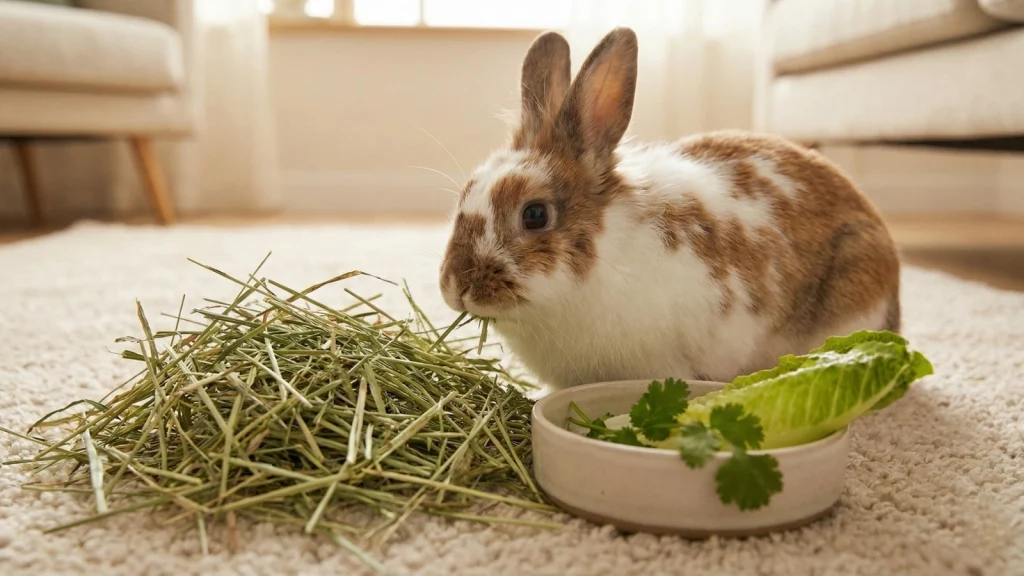
- 80% High-Quality Hay
- 15% Fresh Vegetables
- 5% High-Quality Pellets
- 0% Junk Food/Treats (Keep these very minimal)
Best Hay for Rabbits
Hay keeps their gut moving and wears down their constantly growing teeth.
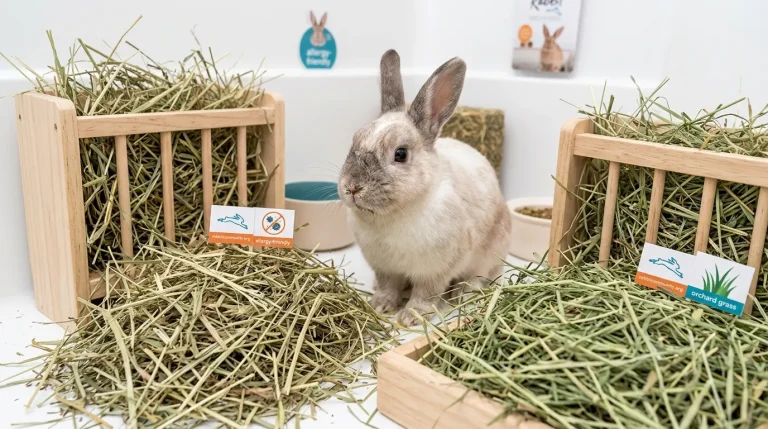
- Timothy Hay: This is the gold standard for adult rabbits. It is high in fiber and low in calories.
- Orchard Grass: A good alternative if you are allergic to Timothy hay. It is softer but still nutritious.
- Alfalfa: Only for baby rabbits (under 6 months). It is too high in calcium and protein for adults and can cause bladder stones.
Vegetables Safe for Rabbits
Fresh greens provide hydration and vitamins. Aim for 1 cup of greens per 2 lbs of body weight daily.
Leafy Greens List:
- Romaine lettuce (Not Iceberg!)
- Cilantro
- Parsley
- Dill
- Kale (in moderation)
- Mint
- Basil
Portion Guidelines Introduce new veggies slowly. Start with one small piece and watch their poop. If it gets runny, stop that veggie.
Foods Rabbits Should Never Eat
Some foods are dangerous or toxic.
- Iceberg Lettuce: Contains lactucarium, which can be harmful, and it has almost no nutritional value (mostly water).
- Carrots: Wait, really? Yes. Carrots are high in sugar. They should be a rare treat, not a meal.
- Yogurt Drops/Human Treats: Rabbits are strict vegans. No dairy, no meat.
- Toxic Foods: Chocolate, onions, garlic, avocado, potato leaves, and rhubarb.
Can Rabbits Have Kiwi Skin, Seeds, Leaves, Barriers?
Water Needs and Feeding Schedule
Bowl vs Bottle Rabbits prefer heavy ceramic bowls.
- Why? It is a more natural drinking position. They drink more water from a bowl, which keeps them hydrated.
- Bottles: Can get stuck or drip. They are harder to clean.
Daily Routine
- Morning: Refill hay, fresh water, small amount of pellets.
- Evening: Refill hay, fresh water, salad (veggies).
Basic Rabbit Health and Wellness
Rabbits are experts at hiding illness. In the wild, a sick rabbit is a target. You must be observant.
Common Rabbit Health Problems
GI Stasis (Gastrointestinal Stasis) This is the big one. It means the gut slows down or stops.
- Cause: Stress, pain, or bad diet.
- Symptoms: Not eating, no poop, hunched posture.
- Urgency: Emergency. A rabbit can die within 24 hours without treatment.
Dental Issues Rabbit teeth never stop growing. If they don’t eat enough hay, teeth can grow spurs that cut their cheeks. This causes pain and stops them from eating.
Respiratory Infections Often called “Snuffles.” Look for discharge from the nose or eyes and sneezing.
Signs of a Healthy Rabbit
- Appetite: Eating hay constantly.
- Poop: frequent, round, dry, and golden-brown.
- Activity: Alert, curious, and moving around.
- Eyes/Nose: Clean and clear.
When to Visit a Rabbit Vet
Emergency Signs (Go immediately):
- Has not eaten for 12 hours.
- Has not pooped for 12 hours.
- Mouth breathing (panting).
- Limp or paralyzed.
- Screaming (rabbits only scream in terror or agony).
Routine Checkups Find a vet who specializes in Exotics. A standard dog/cat vet may not know rabbit physiology well enough. Go for an annual wellness exam.
Vaccinations and Preventive Care
Region-Based Vaccination Needs Depending on where you live (USA, UK, Europe, Australia), you may need vaccines for:
- RHDV2 (Rabbit Hemorrhagic Disease Virus): A highly contagious and fatal virus. It is now in the US and many other places. Vaccination is strongly recommended.
- Myxomatosis: Common in UK/Europe.
Parasite Prevention Check for fleas and ear mites. Never use “Frontline” on rabbits; it is toxic to them. Ask your vet for rabbit-safe revolution.
Grooming and Hygiene
Rabbits keep themselves clean, but they need help.
How Often Should You Groom a Rabbit?
Short Hair vs Long Hair
- Short Hair (e.g., Rex): Brush once a week.
- Long Hair (e.g., Lionhead, Angora): Brush daily to prevent mats. Mats can tear the skin.
Seasonal Shedding (Molting) Every few months, rabbits do a heavy shed. It looks like a fur explosion. You must brush them daily during this time. If they swallow too much fur while grooming themselves, it can cause a blockage.
Nail Trimming and Dental Care
Nail Trimming Basics Trim nails every 6 to 8 weeks. If they get too long, they can snag and rip off, or curl into the foot. Use a small flashlight to see the “quick” (the blood vessel inside the nail) so you don’t cut it.
Teeth Wear Importance You don’t brush rabbit teeth. You feed them hay. The grinding motion of chewing hay keeps teeth filed down naturally.
Cleaning the Rabbit Living Area
Daily Cleaning
- Scoop the litter box.
- Remove uneaten fresh food (to prevent mold).
- Refill water.
Weekly Cleaning
- Dump the whole litter box and scrub it.
- Wash food bowls.
- Wash bedding/blankets.
- Odor Control: White vinegar is the best cleaner. It dissolves rabbit urine calcium deposits and neutralizes smell.
Rabbit Behavior and Body Language
Rabbits don’t bark or meow. They speak with their bodies.
Understanding Rabbit Behavior
Binkying This is the best thing ever. A “binky” is when a rabbit jumps in the air and twists its body. It means purely: “I am so happy!”
They stomp their back foot hard.
- Meaning: “I am scared” or “I am annoyed.”
- Action: Check for what scared them.
Zoomies Running in circles at top speed. It’s a sign of energy and happiness.
Signs of Stress or Fear
Body Posture A stressed rabbit will press its belly flat to the floor, ears pinned back tight against the head, eyes bulging.
Hiding Behavior If your rabbit refuses to come out of a hidey-house for a long time, they might be sick or scared.
Bonding With Your Rabbit
Building Trust Rabbits bond on their terms.
- Sit on the floor.
- Have treats (small pellets or herbs).
- Ignore the rabbit. Look at your phone or read a book.
- Let them investigate you.
- Don’t grab them. Patience is key. It can take weeks.
Handling and Socialization
Most rabbits actually hate being picked up. It mimics being grabbed by a hawk.
How to Pick Up a Rabbit Safely
Only pick them up when necessary (health checks, moving them). Proper Technique:
- One hand under the chest.
- One hand supporting the hind legs/butt.
- Pull them close to your chest securely.
What Not to Do:
- NEVER pick a rabbit up by the ears. This is painful and cruel.
- Never let their back legs dangle. They can kick so hard they break their own spine.
Rabbits and Children
Supervision Rules Rabbits are fragile. A toddler falling on a rabbit can break the rabbit’s ribs.
- Children should always sit on the floor to interact with the bunny.
- Teach kids to pet the head gently.
- No chasing.
Can Rabbits Live With Other Pets?
Dogs and Cats It depends on the prey drive.
- Dogs: A high prey drive dog (like a Terrier) is risky. A calm Golden Retriever might be fine. Always supervise.
- Cats: Often get along well, but a cat scratch can be dangerous for a rabbit.
Multi-Rabbit Bonding Rabbits are herd animals and love having a friend. However, both rabbits must be spayed/neutered before meeting. Bonding two rabbits is a slow, careful process to prevent fighting.
Exercise and Enrichment
A bored rabbit is a destructive rabbit.
How Much Exercise Do Rabbits Need?
Daily Activity Needs Rabbits are crepuscular, meaning they are most active at dawn and dusk.
- Free-Roam Time: They need at least 3 to 4 hours out of their pen daily to run, explore, and stretch.
- Full Free-Roam: Many owners let their rabbits free-roam the house 24/7 (like a cat), provided the house is bunny-proofed.
Best Toys for Rabbits
You don’t need expensive toys.
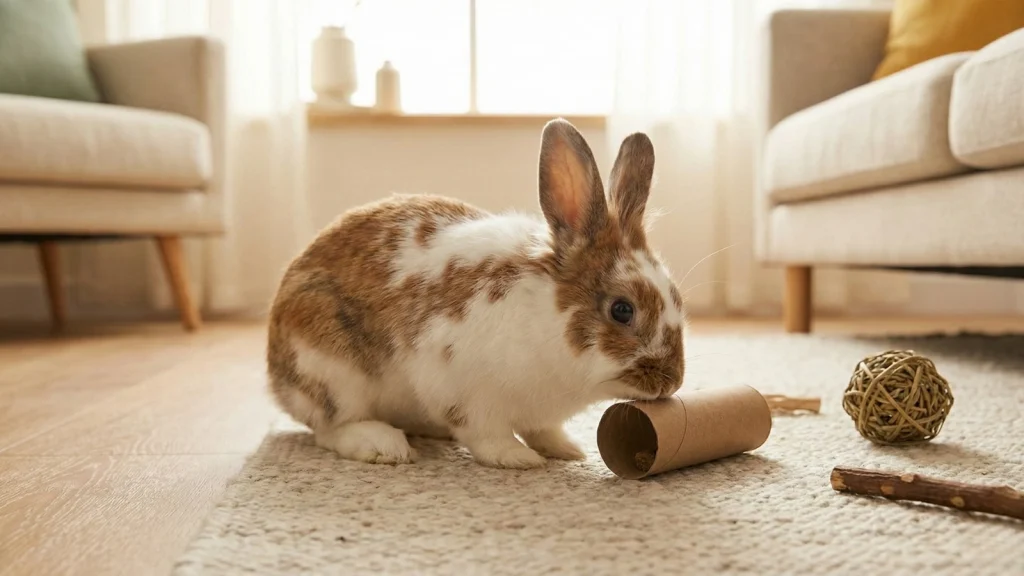
- Chew Toys: Apple wood sticks, willow balls, untreated seagrass mats.
- Mental Stimulation: Logic puzzles (hide a treat under a cup).
Preventing Boredom
Enrichment Ideas
- The Toilet Paper Roll: Stuff a cardboard roll with hay and hide a treat in the middle.
- Cardboard Castles: Cut holes in shipping boxes. They love to renovate (destroy) them.
- Dig Box: Fill a box with shredded paper so they can dig safely.
Rabbit Proofing Your Home
If you let them out, they will taste your stuff.
Protecting Wires and Furniture
Chewing Prevention Rabbits love the texture of spicy hay (electrical cords). This is dangerous (electrocution) and expensive.
- Solution: Use hard plastic split-loom tubing or cord protectors on every accessible wire.
- Baseboards: If they chew wood trim, block it off with grids or use bitter apple spray (though some like the taste!).
Plants and Household Dangers
Toxic Plants Many houseplants are deadly. Lilies, Aloe, Ivy, and Philodendrons are toxic. Keep plants high up or in a different room.
Safe Environment Checklist
- Cords covered?
- Under-couch areas blocked (if you can’t reach them)?
- Houseplants removed?
- Cleaning chemicals stored away?
Cost of Owning a Rabbit
Rabbits are not cheap pets.
Initial Setup Costs
Expect to spend $200 – $500 upfront.
- Adoption fee: $50 – $100.
- Spay/Neuter (if not included): $200 – $400.
- Enclosure/X-Pen: $50 – $100.
- Litter box, bowls, water bottle: $50.
Monthly and Yearly Expenses
- Food (Hay/Veg/Pellets): $40 – $60 per month.
- Litter/Bedding: $20 per month.
- Vet Bills: Routine checkups are $80 – $100. Emergency visits can easily hit $500 – $1,000.
- Toys/Chews: $20 per month.
Common Beginner Mistakes
Let’s save you some trouble by listing what not to do.
- Buying “Gourmet” Pellets: Avoid pellets with seeds, corn, and colorful bits (muesli). It looks tasty but causes obesity and dental rot. Buy plain, boring, timothy-based pellets.
- Using a Small Cage: Pet store cages are almost always too small. Use an exercise pen.
- Bathing the Rabbit: Do not bathe your rabbit. Rabbits panic in water and can go into shock or die of hypothermia. If they are dirty, do a “butt bath” only on the dirty area.
- Feeding Too Many Carrots: Remember, high sugar!
- Ignoring GI Stasis: Waiting “to see if they get better” is usually fatal.
Rabbit Care Checklist for Beginners
Print this out and stick it on your fridge!
Daily Tasks:
- Refill Timothy hay (unlimited).
- Provide fresh water in a bowl.
- Feed fresh leafy greens (1 cup/2lbs).
- Feed small amount of pellets (1/4 cup max for avg rabbit).
- Scoop litter box.
- Let rabbit out for 3+ hours of exercise.
- Check for health signs (eating/pooping).
Weekly Tasks:
- Deep clean litter box with vinegar.
- Wash food and water bowls.
- Groom/Brush fur.
- Check teeth and ears.
Monthly/Occasional:
- Trim nails (every 6-8 weeks).
- Deep clean the whole enclosure.
- Buy more hay!
Frequently Asked Questions
Are rabbits hard to take care of?
Yes and no. They are not “set it and forget it” pets. They require daily cleaning, fresh food preparation, and socialization. However, once you get into a routine, they are very manageable and rewarding.
Can rabbits be left alone?
Rabbits should not be left alone for more than 24 hours. They need daily feeding and observation. If you go on vacation, you need a pet sitter who knows rabbits.
Do rabbits smell?
Rabbits themselves are very clean and smell like clean laundry or hay. However, their urine smells strong if you don’t clean the litter box. If you scoop daily, there is almost no smell.
How long can a rabbit live indoors?
With good care, proper diet, and a safe indoor environment, rabbits typically live 8 to 12 years.
Conclusion
Owning a rabbit is a journey. It requires patience, a bit of money, and a lot of hay. But in return, you get a sensitive, funny, and loving companion.
If you are ready to respect their needs—providing a large space, the right diet, and gentle handling—you are ready to be a rabbit owner. Remember, adopt, don’t shop! There are thousands of bunnies in shelters waiting for a forever home.
Ready to learn more? Check out our other guides on [Rabbit Diet Deep Dive] or [How to Bond Two Rabbits].
Good luck with your new furry friend!