Can Rabbits Survive on Hay Only?
A rabbit can survive for a while on good grass hay and fresh water, but hay alone isn’t a complete long-term diet. Hay supplies the fiber that keeps the gut moving and wears teeth down evenly. Most rabbits also need leafy greens and a small portion of pellets for vitamins and minerals.
By Jane Smith, Rabbit Behaviorist and educator with Rabbit Community of America. Jane has 12 years in psychology and has fostered and rehabilitated 500+ rescue rabbits.
You’ve filled the hay rack, and your rabbit chews through it all day. Maybe your rabbit snubs the greens and pellets. So you wonder if hay is enough.
I hear this question from new owners almost every week. The honest answer has layers, so let’s take them one at a time.
Can a rabbit live on hay alone?
A healthy adult rabbit can live on hay and water for a period, but it won’t thrive on that menu for years. Hay covers fiber and dental wear. It can’t reliably cover every vitamin and mineral. The House Rabbit Society recommends hay as the base, plus greens and a few pellets.
Think of hay as the foundation of a house. You can’t live in a foundation alone. You need walls and a roof too.
Wild rabbits show the same pattern. They eat grass, but they also nibble leaves, weeds, flowers and bark. A single dry food never makes up their whole day.
Your rabbit’s survival and your rabbit’s health are also two different goals. A rabbit can stay alive on a thin diet while its body quietly runs short on nutrients. That gap often shows up months later.
Why does hay matter so much to a rabbit?
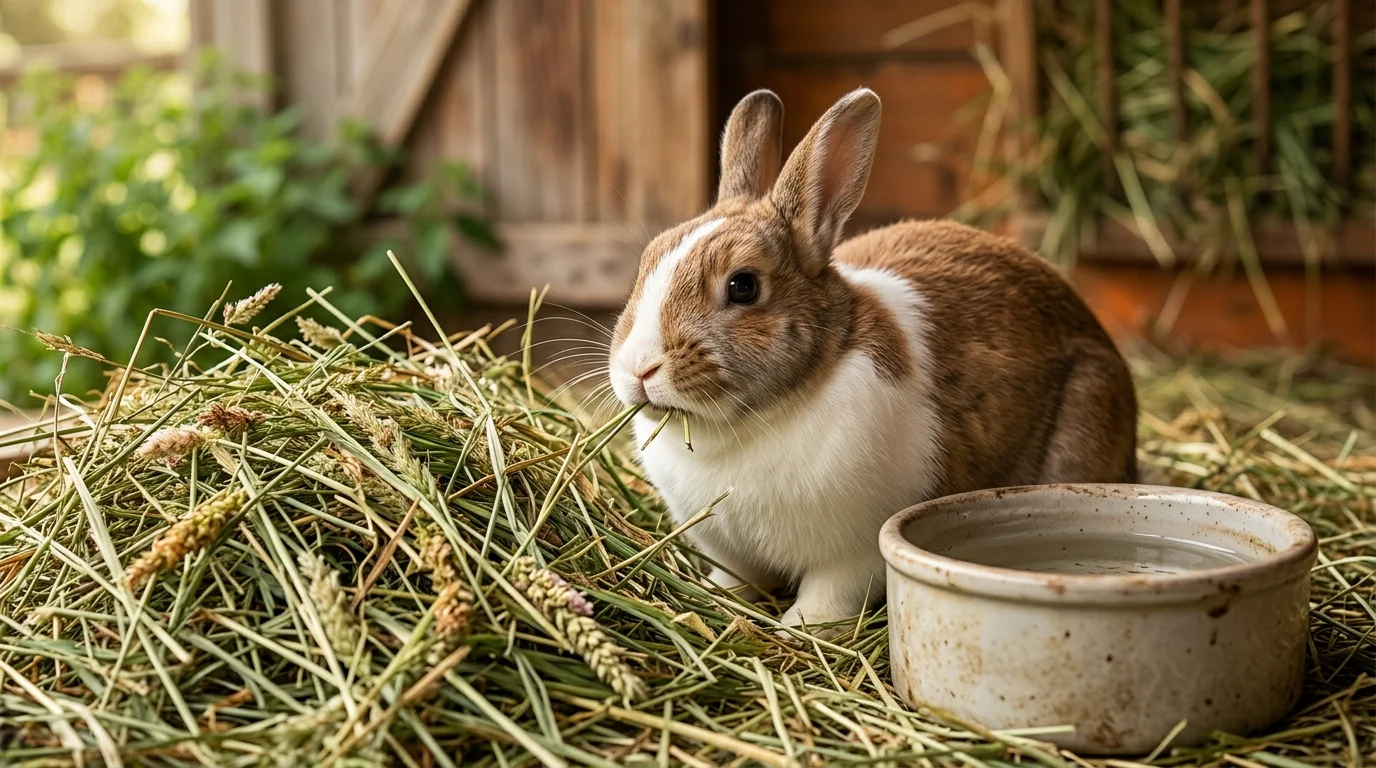
Hay matters because rabbit guts need constant fiber to keep moving, and rabbit teeth never stop growing. Chewing hay grinds those teeth down evenly. The fiber also pushes food through the digestive tract. Without it, both systems start to fail.
Rabbit teeth keep growing for life. A rabbit that chews soft food all day lets its molars overgrow. Sharp spurs can then cut the cheeks and tongue.
Gut health works the same way. Fiber keeps the intestines active. When the gut slows down, gas builds up and the rabbit stops eating. That condition is called gastrointestinal stasis, and it’s an emergency.
Hay is not optional. Unlimited hay is the one non-negotiable in any rabbit’s diet. So if you’re asking whether hay is enough, you’re already past the hardest step.
What can a hay-only diet miss?
A hay-only diet can miss vitamins, minerals and calories that a rabbit needs, depending on the hay type and the rabbit’s life stage. Grass hay varies a lot by cutting and storage. Pellets and greens fill those gaps. They also add moisture and variety that dry hay can’t offer.
Here are the gaps I see most often in hay-only rabbits.
- Vitamin A and other vitamins that fresh greens supply
- Calories for rabbits that are growing, pregnant or recovering from illness
- Moisture, since fresh greens add water to the daily intake
- Mental variety, since a rabbit can get bored of one food
Hay quality is the biggest wild card. Old hay loses nutrients as it sits. Dusty or moldy hay can also harm a rabbit’s lungs and gut.
The Merck Veterinary Manual covers rabbit nutrition in its lagomorph sections. I’d suggest reading it alongside your vet’s advice for your own rabbit.
What I’ve seen with hay-only rabbits
In my experience, rabbits on hay-only diets often look fine at first and then show subtle problems over time. I’ve met many of them through rescue work. The pattern repeats so often that I now ask about diet before anything else.
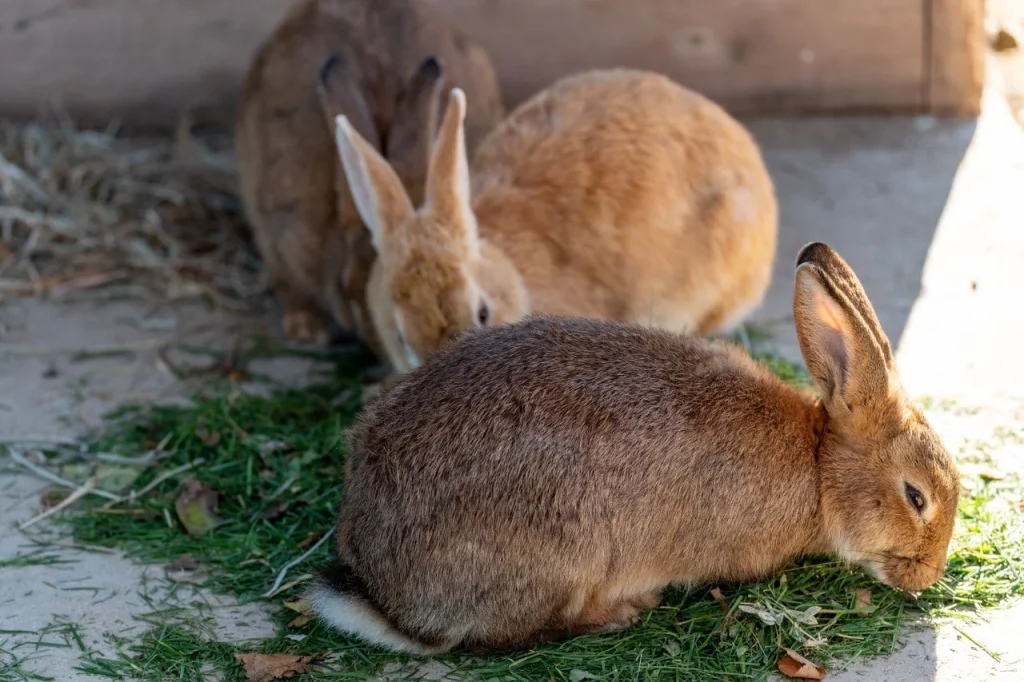
A few years ago, an owner brought me a young doe she’d raised on hay alone. I’ll call her Clover. Her owner had read that hay was the most important food, and she took that advice to heart.
Clover chewed hay all day. She had good gut movement and tidy droppings. But her coat looked dull, and she felt lighter than she should.
The owner felt terrible. She had done what she thought was right, and she had worked hard at it. I told her what I tell everyone. Hay was the right foundation, and she only needed to build on it.
We added a small, measured portion of plain pellets. Then we introduced one leafy green at a time over several weeks. Clover’s coat came back, and her weight steadied.
I’ve also worked with the opposite problem. Some rescue rabbits arrive overfed on pellets and fruit. They ignore hay completely. Those rabbits often have the worst teeth and the most fragile guts.
After fostering and rehabilitating hundreds of rabbits, I trust one rule. Start with unlimited hay, then add the rest in small steps. Slow changes protect the gut.
Which hay should you feed?
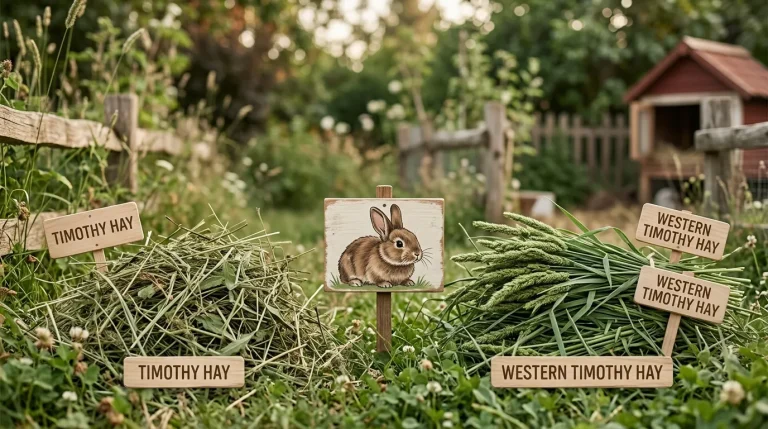
Adult rabbits do best on grass hay such as timothy, orchard grass or meadow hay. Young rabbits under about seven months usually need alfalfa hay for extra protein and calcium. Check with your vet about when to switch. Always choose hay that smells fresh and looks green.
Here’s how the main types compare.
| Hay type | Best for | Notes |
|---|---|---|
| Timothy | Adult rabbits | Common and widely available |
| Orchard grass | Adults who dislike timothy | Softer and sweeter |
| Meadow hay | Variety | Mixed grasses add interest |
| Alfalfa | Growing rabbits | Richer, so adults need less |
Rotating two or three grass hays keeps meals interesting. Many picky rabbits start eating more once you mix in a new type. Always introduce a new hay slowly.
Check each bag when you open it. Good hay smells sweet and looks mostly green. Skip anything damp, dusty or musty.
Who should never eat hay only?
Baby rabbits, pregnant or nursing does, seniors that lose weight and rabbits recovering from illness should never rely on hay alone. These rabbits need extra calories and nutrients. Your vet can tailor the plan, and in some cases will suggest special supplemental food.
Young rabbits grow fast and burn through energy. Alfalfa and pellets support that growth. Pregnant and nursing does also need extra nutrition to feed their kits.
Senior rabbits often struggle to hold weight. Dental disease can make hay harder to chew. If your older rabbit eats less hay, call your vet quickly.
If you’re caring for orphaned kits, don’t use a hay-only plan at all. Our guide on feeding baby rabbits without a mother covers that situation in detail.
What does a balanced rabbit diet look like?
A balanced rabbit diet puts unlimited hay first, then a daily serving of fresh leafy greens, then a small portion of plain pellets. Treats such as fruit stay occasional and tiny. Portions depend on your rabbit’s weight and age, so check the pellet label and ask your vet.
Use this order of priority every day.
- Unlimited fresh grass hay and clean water
- A daily serving of washed leafy greens
- A small, measured portion of plain pellets
- Rare, tiny treats
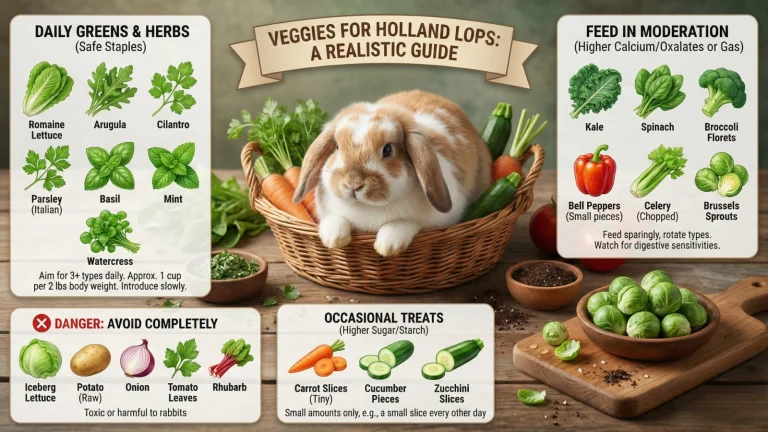
Our post on what rabbits can eat daily lists safe greens and foods to avoid. If you own a small breed, see veggies for Holland Lops for breed-specific tips. Our Rabbit Care 101 guide ties the whole routine together.
Add one new food at a time. Wait a few days before adding another. That way you can spot the food that upsets your rabbit’s stomach.
How can you tell if the diet is falling short?
Watch for dull fur, weight loss, soft or small droppings, a drop in appetite and chewing problems. Any of these signs can mean the diet isn’t meeting your rabbit’s needs. Contact an exotics-savvy vet quickly, since rabbits hide illness well.
Here are the signs I check first.
- Droppings that turn small, soft or sparse
- A rabbit that stops eating hay or leaves food behind
- Drooling or wet fur around the chin
- Visible weight loss when you feel the spine and hips
- A dull, thinning or greasy coat
A rabbit that stops eating for even a day needs a vet call. Rabbit guts slow down fast. Early action often decides the outcome.
You know your rabbit best. If something feels off, trust that instinct and make the call.
Frequently asked questions
Can rabbits eat only hay and pellets?
Many rabbits do well on hay and pellets, but fresh greens add moisture, variety and extra nutrients. Hay should still make up most of the diet. Pellets work best as a small, measured portion, not an open bowl. Talk with your vet about the right balance for your rabbit.
How much hay should a rabbit eat each day?
A rabbit should have unlimited hay, available all day and night. Your rabbit should eat a pile roughly its own body size daily. Refill the rack often so it never runs empty. Fresh hay also encourages more eating than stale hay.
What if my rabbit refuses hay?
A rabbit that refuses hay needs a vet check first, since dental pain often causes this. If teeth are fine, try new hay types, cut back on pellets and offer hay in several spots. Don’t wait long, because a rabbit that eats little hay risks gut trouble.
Your next step
Hay should fill most of your rabbit’s day, and hay alone can keep a rabbit alive for a while. A balanced plan keeps your rabbit healthy for years. Start with fresh grass hay, add greens slowly and measure the pellets.
If your rabbit already eats only hay, don’t panic. Many caring owners start there. Add one new food this week and watch how your rabbit responds.