Can Rabbits Eat Asparagus? Safe Serving Guide 2026
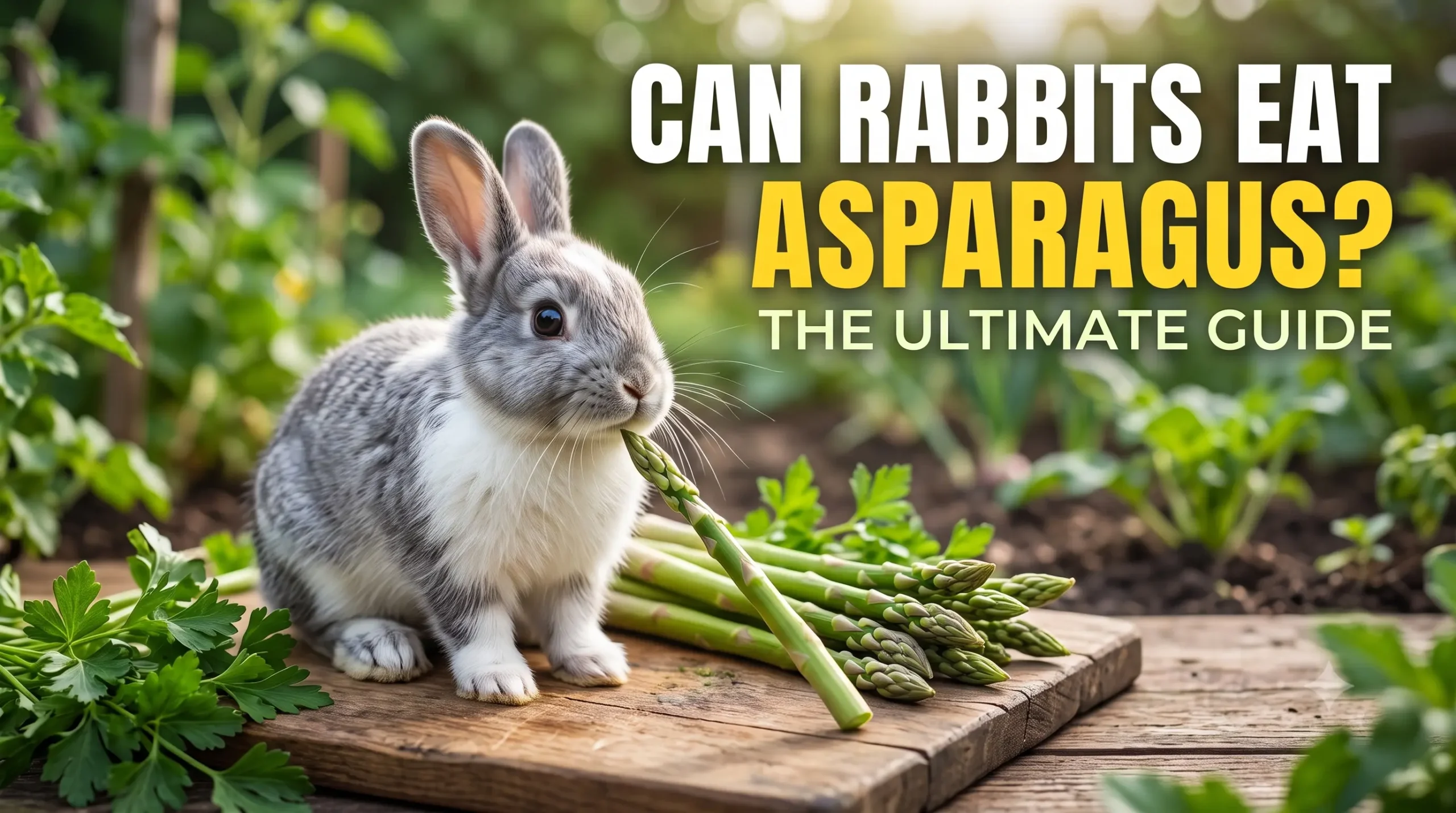
Yes, rabbits can eat asparagus. It’s non-toxic and low in calories, and most rabbits enjoy the crunch. Wash the spears, trim the woody base and offer only a small piece to start. Treat it as an occasional vegetable rotated with other options, not a daily staple. Hay should still fill most of the bowl.
Is Asparagus Safe for Rabbits?
Asparagus is safe for most rabbits when you serve it raw and fresh. The spears contain nothing that House Rabbit Society flags as toxic, and they fit the same non-leafy category as celery or bell peppers.
Asparagus doesn’t appear by name on House Rabbit Society’s own vegetable list, so treat it as an extra rather than a staple. Their general rule still applies here. Non-leafy vegetables should stay under about 15% of your rabbit’s fresh food, or roughly one tablespoon per two pounds of body weight a day.
Start with one small piece. Watch your rabbit’s stool over the next day. Soft stool means you should drop the asparagus and try a different vegetable next time.
Asparagus vs. Asparagus Fern: Don’t Confuse the Two
Asparagus the vegetable and asparagus fern are different plants that happen to share a name. That overlap sends a lot of worried owners searching mid-panic.
Asparagus fern is a houseplant, also sold as emerald feather or lace fern. ASPCA lists it as toxic. Repeated skin contact with the leaves can trigger allergic dermatitis, and the berries can cause vomiting or stomach pain if a pet eats them.
The grocery-store spears you’re feeding your rabbit are an entirely different plant. Keep the ornamental fern out of your rabbit’s reach anyway, since a curious nose can’t tell the two apart by smell alone.
How Much Asparagus Can You Give Your Rabbit?
One or two thumb-sized pieces mixed in with other vegetables is a reasonable serving for an average adult rabbit. Asparagus should never replace the three or more leafy greens your rabbit needs daily.
Offer it once or twice a week rather than every day. Asparagus carries a lot of water, and too much of any high-water vegetable can loosen your rabbit’s stool.
Pair each serving with a leafy green like romaine or cilantro. That keeps the bowl leaning toward the leafy 75% that House Rabbit Society recommends for a balanced diet.
How to Prepare Asparagus for Your Rabbit
Wash the spears well before serving. Rinse them for a couple of minutes and change the water once. This matches the washing step House Rabbit Society recommends for all fresh vegetables, partly as a precaution against RHDV2 contamination.
Trim off the tough, fibrous base first. Cut the rest into short pieces your rabbit can pick up and chew easily.
Serve it raw. Cooking softens the fiber your rabbit’s gut relies on, and cooked vegetables are harder for a rabbit to process than fresh ones.
Signs Your Rabbit Isn’t Handling Asparagus Well
Watch for soft stool, diarrhea or a rabbit that skips its next meal. These signs mean the vegetable doesn’t agree with your rabbit, not that you did anything wrong.
Pull asparagus from the diet right away if you notice any of these signs. Call your vet if soft stool lasts more than a day, or if your rabbit stops eating hay. Reduced appetite in a rabbit can turn serious fast.
Other Vegetables to Rotate With Asparagus
Rotating vegetables keeps your rabbit’s diet balanced and keeps mealtime interesting. Mix asparagus with a few of these:
- Romaine lettuce
- Cilantro
- Bell peppers
- Bok choy
- Broccoli leaves and stems
For the full daily feeding breakdown, see What Can Rabbits Eat Daily?
Frequently Asked Questions
Can baby rabbits eat asparagus? No. Baby rabbits under twelve weeks should stick to alfalfa hay and pellets. Wait until your rabbit is closer to three months old before adding vegetables like asparagus.
Can rabbits eat asparagus every day? No. Keep asparagus to once or twice a week. Daily feeding pushes past the 15% limit House Rabbit Society sets for non-leafy vegetables.
Is cooked asparagus safe for rabbits? No. Serve asparagus raw. Cooking softens the fiber your rabbit’s digestion depends on and makes the vegetable harder to break down.