How to Get Rid of Rabbits Without Killing Them?
You can remove rabbits from your yard without killing them. Fencing, scent repellents, motion-activated sprinklers, and rabbit-resistant plants keep rabbits out without harming them. Live trapping and relocation work too, but check your local wildlife laws first, since some states restrict or ban relocating wild rabbits.
Why Do Rabbits Show Up in Your Yard?
Rabbits show up in your yard because it offers food, cover, and safety from predators. A vegetable garden, a soft lawn, and dense shrubs along a fence line give a rabbit everything it needs within a few hundred feet.
You’ll usually spot the signs before you spot the rabbit. Neat, angled cuts on stems, small round droppings near garden beds, and shallow dug-out resting spots under bushes all point to rabbit activity rather than deer or groundhogs.
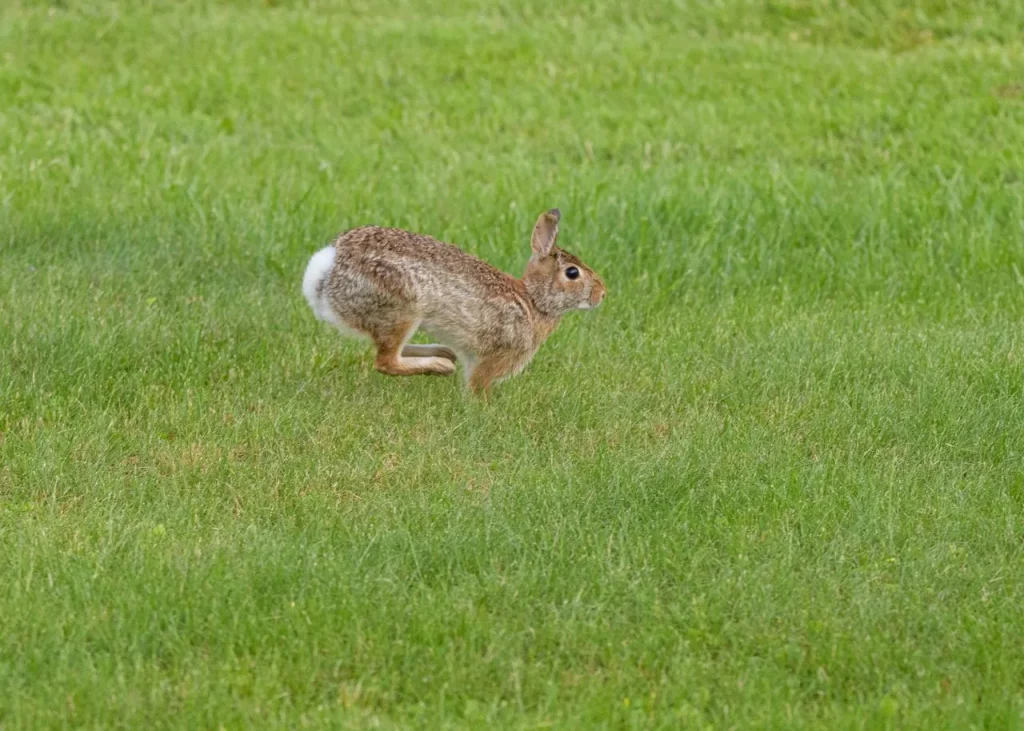
Rabbits breed fast and stay close to a good food source. Once a doe finds a reliable yard, she can raise several litters there in a single season, which is why early deterrence works better than waiting for the problem to grow.
How Do You Fence Rabbits Out of a Garden?
Fencing keeps rabbits out more reliably than any repellent. A chicken wire fence at least two feet tall, with the bottom six inches bent outward and buried, stops most rabbits from digging under or squeezing through.
Use mesh no wider than one inch. Rabbits can flatten their bodies and slip through gaps that look too small to matter, so a tight weave near ground level does most of the work.
Check the fence line after storms and mowing. A single gap at the base undoes the whole barrier, since a rabbit only needs one opening to get in and keep coming back.
Raised garden beds add another layer of protection. Line the bottom of the bed with hardware cloth before you fill it with soil, and a rabbit can’t tunnel up from underneath.
Which Scents and Repellents Keep Rabbits Away?
Scent repellents work by masking the smells rabbits use to find food. Predator urine, garlic spray, and blood meal all interrupt a rabbit’s sense that a yard is safe to feed in.

Reapply repellents after rain. Most scent-based products break down within a week or two outdoors, and a rabbit will test the same spot again once the smell fades.
Motion-activated sprinklers work differently and often last longer. The sudden burst of water and movement startles a rabbit without touching it, and most rabbits learn to avoid the triggered zone within a few visits.
Rotate your repellent methods every few weeks. Rabbits adapt to a single deterrent over time, so switching between scent, sound, and motion keeps the yard feeling unpredictable to them.
Which Plants Do Rabbits Avoid?
Rabbits avoid plants with strong scents, fuzzy leaves, or bitter sap. Lavender, marigold, and ornamental alliums sit near the top of most rabbit-resistant plant lists for home gardens.
Herbs work as a natural border. Rosemary, mint, and sage planted along the edge of a vegetable bed give rabbits a reason to turn away before they reach the food you actually want to protect.
No plant is fully rabbit-proof during a hungry spring. A young rabbit will sample almost anything when other food is scarce, so pair rabbit-resistant plants with fencing rather than relying on plant choice alone.
How Do You Humanely Trap and Relocate a Rabbit?
Live trapping catches a rabbit unharmed in a small wire cage baited with fresh greens. Check the trap every few hours, since a trapped rabbit can overheat or panic if it sits too long in direct sun.
Cover the trap with a light cloth once the rabbit is caught. The dark, quiet space lowers its stress during transport, and a calm rabbit handles the move far better than a panicked one.
Release the rabbit close to where you caught it whenever your local rules allow. Rabbits have small home ranges, and moving one too far from familiar territory can lower its odds of finding food and shelter.
Contact a licensed wildlife rehabilitator before you trap if you’re not confident handling a wild animal. A wrong move can injure the rabbit or you, and a rehabilitator can advise on the safest local method.
Is It Legal to Relocate a Wild Rabbit?
Relocating a wild rabbit isn’t legal everywhere, so check your state wildlife agency’s rules first. Some states classify wild rabbits as protected wildlife and restrict where and how you can move one.

Your state fish and wildlife department or local agricultural extension office can confirm the current rules for your area. Calling before you trap saves you from a fine and keeps the rabbit’s relocation legal and humane.
Cottontail rabbits are the species most homeowners deal with in the United States. Domestic rabbits gone feral or dumped outdoors are a separate situation, and a rescue group is the better contact for those cases.
What Should You Avoid Doing?
Avoid poison baits and glue traps entirely. Both cause slow, painful deaths, and poison baits also risk killing the predators and pets that eat the affected rabbit afterward.
Skip lethal traps if your goal is a humane outcome. A live cage trap paired with fencing solves the same problem without the harm, and it’s legal in far more places than lethal control.
Don’t handle a sick-looking rabbit with bare hands. A rabbit that seems disoriented or unafraid of people may carry a treatable illness, and a local wildlife rehabilitator is the safer first call.
Frequently Asked Questions
Will rabbits leave on their own if I stop feeding them?
Rabbits rarely leave a yard on their own once they’ve found food and shelter there. Removing the food source slows new rabbits from arriving, but existing rabbits usually need fencing or trapping to actually go.
Do ultrasonic repellent devices work on rabbits?
Ultrasonic devices show mixed results for rabbits and often lose effectiveness once a rabbit gets used to the sound. Fencing and motion-activated sprinklers give more consistent results for most yards.
Is it safe to relocate a rabbit myself?
It depends on your state’s wildlife rules and your comfort handling a wild animal. Call your local wildlife agency or a rehabilitator first, since some states require a permit or restrict relocation distance entirely.
How do I keep rabbits from coming back after I remove them?
Keep the fence line intact and maintain rabbit-resistant plants at the yard’s edge. New rabbits will keep testing the space, so ongoing fencing checks matter more than any one-time fix.