What Do Wild Rabbits Eat in Winter?
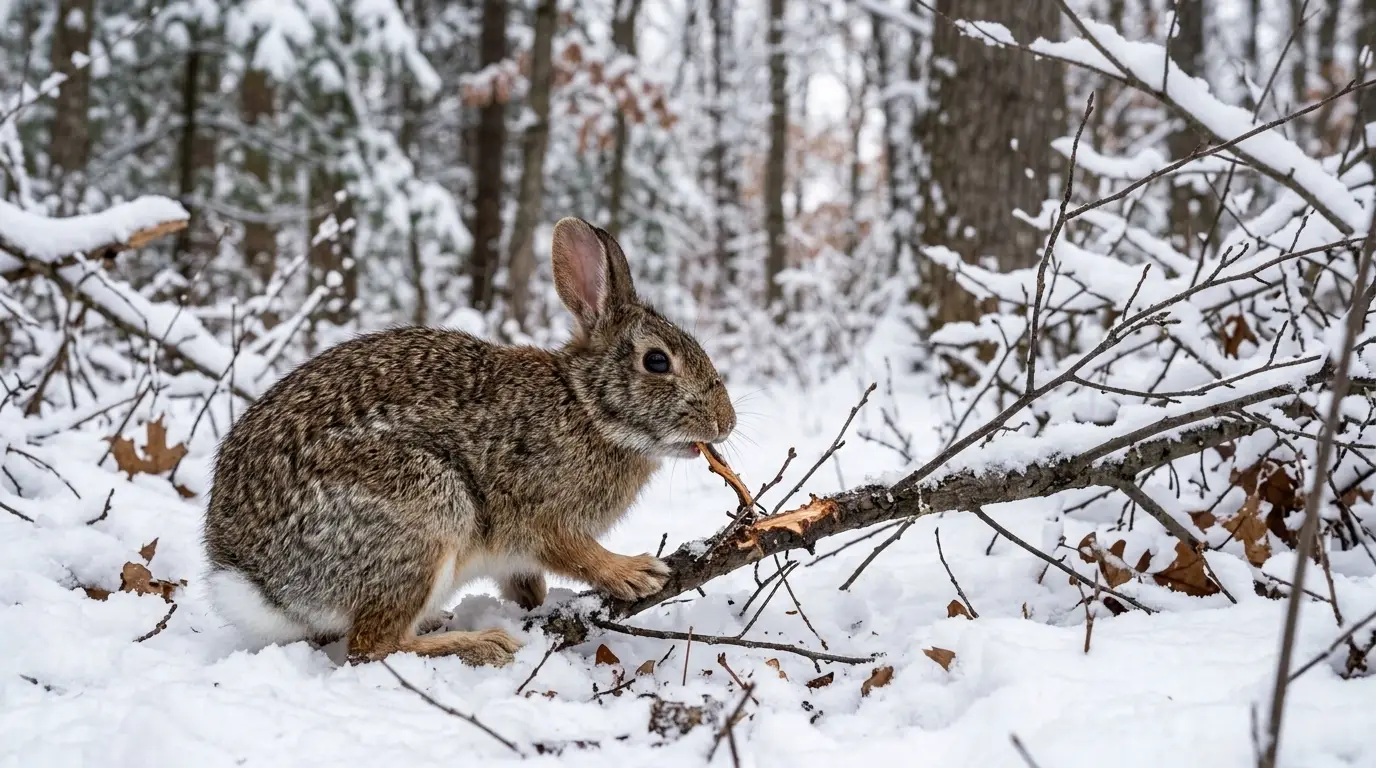
Wild rabbits eat bark, twigs, buds, and evergreen needles once the ground freezes and green plants disappear. According to the Virginia Department of Wildlife Resources (2024), eastern cottontails shift their diet to buds, twigs, and bark once winter sets in, with a particular fondness for sumac bark. This woody browse replaces the grasses and clover you’ll see rabbits eating the rest of the year.
Which Trees and Shrubs Do Wild Rabbits Browse in Winter?
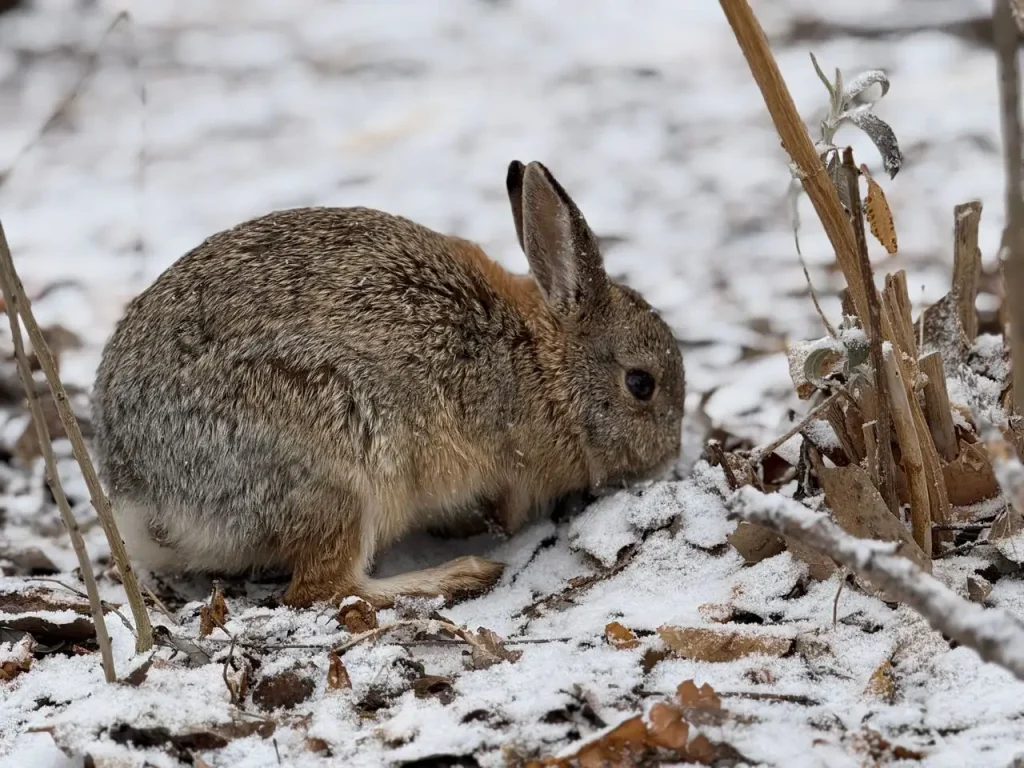
Wild rabbits target the young, soft bark of specific trees and shrubs once snow covers the ground. The State University of New York College of Environmental Science and Forestry (2025) names maple, birch, oak, willow, sumac, and raspberry as top winter picks for eastern cottontails. Rabbits often stand on their hind legs to reach low branches on young saplings.
Across several state wildlife surveys, the most cited winter browse species include:
- Sumac
- Dogwood
- Willow
- Maple and birch
- Blackberry and raspberry canes
- Apple and cherry trees
- Sassafras
The Tennessee Wildlife Resources Agency lists sumac, sassafras, and flowering dogwood as winter staples, along with waste corn on farmland when snow doesn’t cover it. If you garden near a wooded edge, young fruit trees and berry canes are the most exposed to winter browsing.
How Does a Wild Rabbit’s Diet Change Between Summer and Winter?
A wild rabbit’s diet flips from soft green plants in warm months to tough woody plants once winter arrives. The University of Missouri Extension (2024) notes that cottontails eat mostly grasses, clover, and garden vegetables through spring and summer, then switch to bark, buds, and small grains once cold weather sets in.
Summer feeding is fast and frequent, since fresh grass digests easily and rabbits need to eat often. Winter feeding slows down because woody material takes longer to process and offers less energy per bite. That’s why you’ll often see rabbits standing still near cover rather than moving across open ground in January.
Why Do Wild Rabbits Switch to Bark and Twigs in Cold Weather?
Wild rabbits switch to bark and twigs because their preferred grasses and clover die back or freeze under snow. A rabbit’s gut still needs constant fiber to keep moving, and woody plant material supplies that fiber even when nothing green remains. Oklahoma State University Extension notes that heavy winter use of browse and cedar berries signals a shortage of the herbaceous plants rabbits prefer.
This isn’t a rabbit’s first choice. Bark and twigs carry far less nutrition than fresh clover or grass. Rabbits eat them because the alternative is starvation, not because the taste improves.
Do Wild Rabbits Raid Gardens in Winter?
Wild rabbits will raid a garden in winter if woody browse runs short nearby. Illinois DNR’s wildlife resource, developed with University of Illinois Extension and USDA Wildlife Services, confirms that urban cottontails will eat garden plants such as lettuce, peas, beans, and beets when they’re accessible. In orchards, rabbits also strip bark from young fruit trees, which can damage or kill a sapling in a single season.
If you want to protect young trees, wrap the trunks in hardware cloth or plastic tree guards before the first snowfall. A guard extending at least 18 inches up the trunk blocks most winter browsing.
Should You Feed Wild Rabbits in Winter?
Direct feeding isn’t the best way to help wild rabbits through winter. Leaving out bowls of food can make rabbits dependent on people and pull them away from natural foraging instincts that keep them safe from predators. A better approach is planting or preserving the native browse rabbits already rely on.
Brush piles, berry canes, and young native shrubs give rabbits both food and the ground cover they need to hide from hawks, foxes, and coyotes. This natural setup helps rabbits without disrupting how they normally survive the season.
How Do Wild Rabbits Find Food Under Snow?
Wild rabbits reach food under snow by digging down to buried roots, bulbs, and low bark, and by browsing on branches that sit above the snowline. Deep snow actually helps some rabbits reach higher on young trees and shrubs, since it raises them off the ground. This is one reason rabbit damage on saplings often shows up higher on the trunk after a heavy snow year than after a light one.
Rabbits also rely on scent and memory to relocate food patches they used earlier in the season, since visual cues disappear once snow covers the landscape.
Frequently Asked Questions
Do wild rabbits eat pine needles in winter?
Yes. Wild rabbits browse evergreen needles when other plant material is scarce, alongside bark, twigs, and buds from nearby trees and shrubs. Evergreens also give rabbits cover from predators during months when deciduous shrubs are bare.
Do wild rabbits hibernate in winter?
No. Wild rabbits do not hibernate. They stay active through winter, growing a thicker coat and relying on burrows lined with fur and plant material to stay warm between foraging trips.
How much do wild rabbits eat in winter?
Wild rabbits eat less overall in winter than in summer, since woody browse is slower to digest and less available than summer grasses. Cold-weather feeding tends to happen in short, frequent sessions rather than long grazing stretches.
Can I feed wild rabbits vegetables in winter?
It’s best not to feed wild rabbits directly. Store-bought produce can upset their digestion and creates dependence on people. Preserving natural browse near your yard helps more than putting out food.
Related Reading
If you’ve seen rabbits near your garden, check out Do Wild Rabbits Eat Tomatoes? for more on what wild rabbits target in home gardens. For a broader look at rabbit care basics, start with Rabbit Care 101.
Sources: Virginia Department of Wildlife Resources (2024), University of Missouri Extension (2024), Tennessee Wildlife Resources Agency, Oklahoma State University Extension, SUNY College of Environmental Science and Forestry (2025), Wildlife Illinois (University of Illinois Extension, Illinois DNR, and USDA APHIS Wildlife Services).