What Smells do Rabbits Hate?
- Vinegar
- Garlic
- Onions
- Predator urine
- Cayenne pepper spray
- Ammonia
- Lavender
- Peppermint oil
- Marigolds
1. Vinegar
Vinegar breaks down wild rabbits’ nibbling within days. Soak a few rags in undiluted white vinegar and lay them along the border of your vegetable patch. The scent evaporates fast, so refresh the rags every three to four days to keep the barrier working.
2. Garlic
Garlic is toxic to rabbits, so keep it out of any bed your own rabbit can reach. Ingestion damages red blood cells and can cause hemolytic anemia, according to the Merck Veterinary Manual. Plant it only in a section fully fenced off from your pet.
3. Onions
Onions carry the same risk as garlic. The sulfur compounds that repel wild rabbits are toxic to a pet rabbit if eaten, per the Merck Veterinary Manual. Interplant onions only where your own rabbit has zero access.
4. Predator Urine (Fox or Coyote)
Predator urine works fast because it signals danger to any rabbit, including your own. Fox or coyote urine granules around flower beds trigger a real fear response in a nearby pet rabbit, not just the wild ones raiding your garden. Skip this method if you keep a pet rabbit in the yard.
5. Cayenne Pepper
Cayenne pepper spray teaches wild rabbits to avoid a plant after one bite. Mix cayenne pepper with water and a little dish soap, then spray it on the plants rabbits target. Keep it off any bed your pet rabbit can reach or sniff closely, since the spray irritates skin and eyes.
6. Ammonia
Ammonia is not safe to use where a pet rabbit lives or roams. Rabbits show particular sensitivity to house ammonia exposure, per a 2023 study in Frontiers in Microbiology, and the fumes irritate their airway. Choose a different deterrent for any area your own rabbit can access.
7. Lavender
Lavender thins out wild rabbit visits without any risk to your own rabbit. A lavender border along one edge of the garden works as a gentler deterrent. Pair it with a stronger method if the rabbit pressure in your yard is heavy.
8. Peppermint Oil
Peppermint oil keeps wild rabbits at a distance from potted herbs and vulnerable plants. Soak cotton balls in peppermint oil and set them in small dishes nearby. Concentrated essential oils can irritate a rabbit’s nose and lungs, so place the dishes well outside your pet’s range.
9. Marigolds
Marigolds double as a bitter-scented barrier and a splash of color. Plant them densely between vegetable rows and wild rabbits tend to steer clear of that section. They carry no risk to a pet rabbit.
A Few Habits Worth Keeping
Rotate your methods. Wild rabbits adjust to a single smell over time, so switching between two or three keeps them off balance.
Reapply after rain. Every scent on this list washes away in a storm, and that’s when most gardens get raided again.
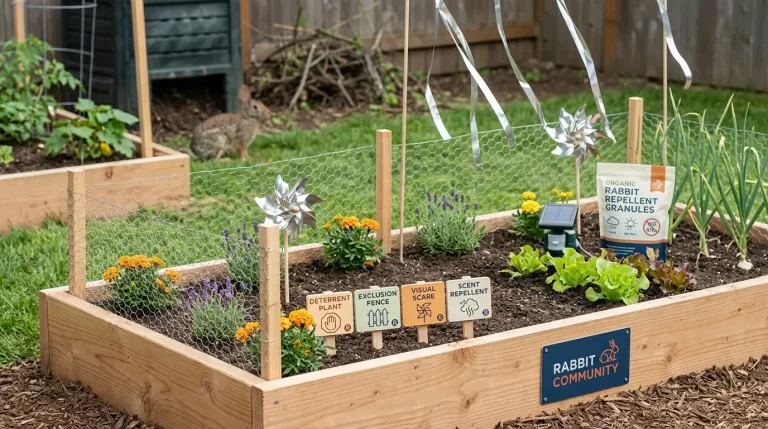
Combine with a physical barrier. Chicken wire around your most valuable beds is what finally solves the problem for good. Scents slow wild rabbits down, but a fence closes the gap scents can’t.