The Sumatran Striped Rabbit: Facts About the World’s Rarest Rabbit
The Sumatran striped rabbit is a wild rabbit species found only in the mountain forests of Sumatra, Indonesia. Scientists first described it in 1880, but sightings stayed so rare that researchers still lack basic population data. The International Union for Conservation of Nature (IUCN) lists the species as Data Deficient.
What Is a Sumatran Striped Rabbit?
A Sumatran striped rabbit (Nesolagus netscheri) is a nocturnal, burrow-dwelling rabbit native to Sumatra’s Barisan Mountains. German biologist Hermann Schlegel named the species in 1880 after E. Netscher, the naturalist who supplied the first specimen. Rabbit experts consider it one of the rarest lagomorphs alive today.
Sumatran striped rabbits share their genus with only one other living relative. The Annamite striped rabbit lives roughly 1,600 kilometers away, on the Laos-Vietnam border. A 2025 genomic study in Scientific Reports found the two species split apart roughly 430,000 years ago.
Where the Sumatran Striped Rabbit Lives
The Sumatran striped rabbit lives only in the Barisan Mountains, a range that runs down western Sumatra, Indonesia. Field records also list one sighting in Gunung Leuser National Park, farther north. Researchers have documented the species most often between 600 and 1,600 meters of elevation, per survey data published in the journal Oryx (McCarthy et al., 2012).
The rabbit favors a specific type of habitat. It prefers:
- Montane and submontane forest
- Volcanic soil
- Dense canopy cover with little human disturbance
This narrow habitat range leaves the species exposed. Any loss of Sumatra’s remaining forest cuts directly into the rabbit’s already small range.
What Does a Sumatran Striped Rabbit Look Like?
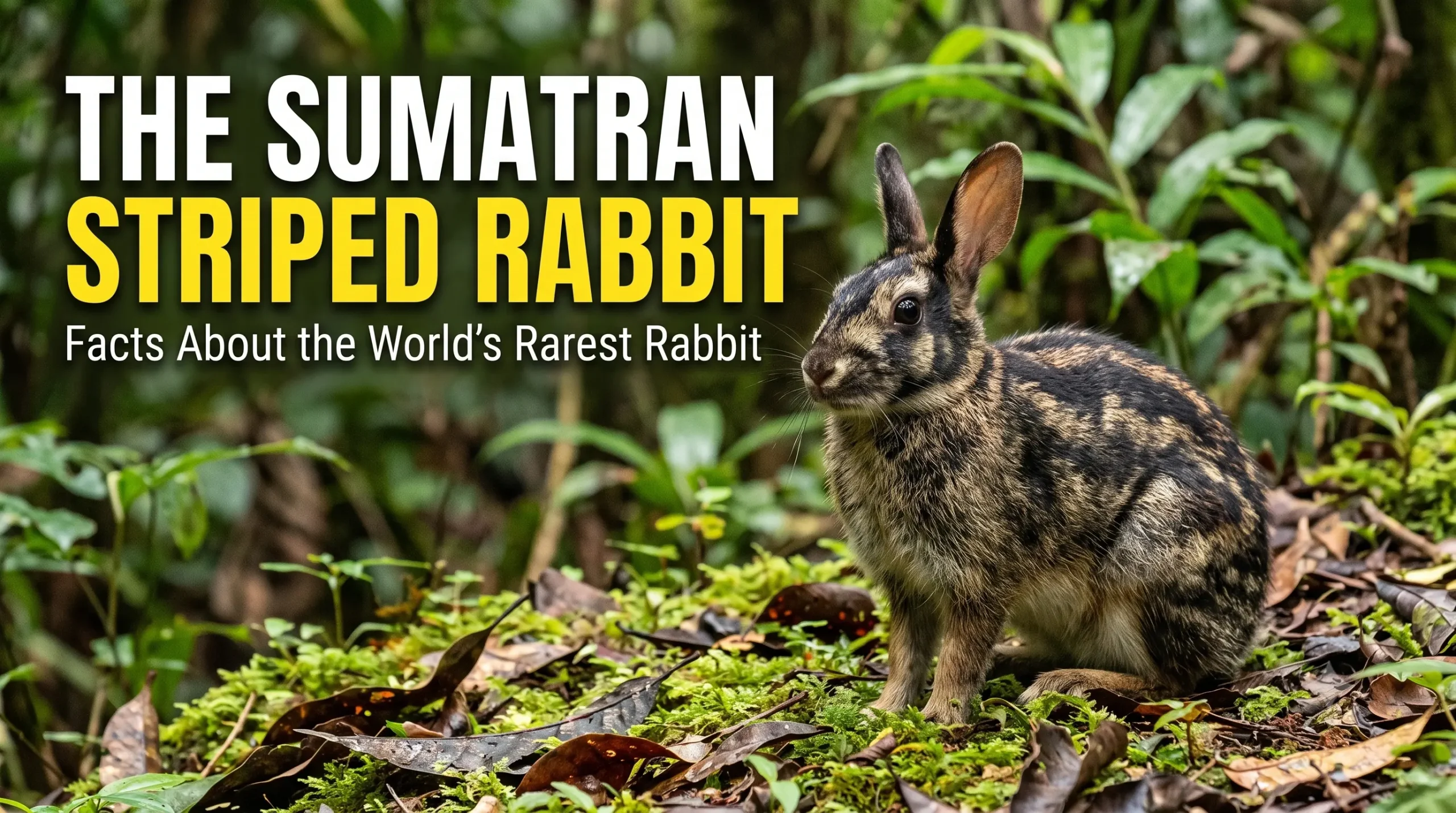
A Sumatran striped rabbit weighs about 1.5 kilograms. It grows 37 to 39 centimeters long, close to the size of a European rabbit, according to the IUCN Species Survival Commission’s Lagomorph Specialist Group (Flux, 1990). Black or dark brown stripes run across its yellowish-grey coat, turning rusty brown near the rump.
Its ears are unusually short. Folded forward, they reach only to the eye. The coloring works as camouflage in dense forest litter.
Underneath, the fur turns whitish across the belly, inner legs and chin. A reddish tail and grey-brown limbs complete the pattern.
A History of Rare Sightings
Confirmed sightings of the Sumatran striped rabbit are so scarce that researchers can list them by year. After the original 1880 specimen, the next confirmed sighting did not come until 1972. No one recorded another until 2000, when a rabbit was photographed nearly three decades later.
Wildlife biologist J.L. McCarthy and colleagues used camera traps to confirm several sightings. They published the findings in the journal Oryx in 2012.
Camera traps have improved detection since then. Survey teams have recorded the rabbit several times at Isau-Isau Wildlife Reserve in South Sumatra. The sightings span the 2010s and 2020s, according to a report in the Journal of Threatened Taxa.
Why Data Deficient Does Not Mean Safe?
The IUCN classified the Sumatran striped rabbit as Data Deficient in its 2019 Red List assessment (McCarthy, Holden & Martyr, 2019). That label means researchers lack enough data for a formal risk category. It does not mean the species is safe.
Wildlife ecologist K. Yoganand argues the rabbit’s shrinking range justifies a higher-risk listing. He published the finding in the journal Oryx in 2025. Conservationists who study the rabbit argue it likely qualifies as endangered or worse.
Deforestation across Sumatra keeps removing the exact habitat the rabbit depends on. Illegal snaring, set for other animals, kills or injures rabbits as bycatch.
The Newest Threat Is the Exotic-Pet Trade
Indian and Thai authorities seized ten live striped rabbits between April and July 2025. One dead rabbit turned up too, across five separate incidents. Researchers published the finding in the journal Oryx in 2025 (Yoganand & Tilker). It marks the first documented case of these rabbits trafficked internationally as pets.
Customs officers found most of the animals in luggage on flights arriving from Thailand. Neither the Sumatran nor the Annamite striped rabbit appears on CITES, the Convention on International Trade in Endangered Species. That gap leaves cross-border trade largely unregulated.
The paper’s authors are urging Indonesia and Vietnam to add both species to CITES Appendix III. Both countries already protect the rabbits under domestic law. Enforcement, the authors note, is the piece still missing.
How Does a Wild Rabbit Differ From Pet Rabbit Breeds?
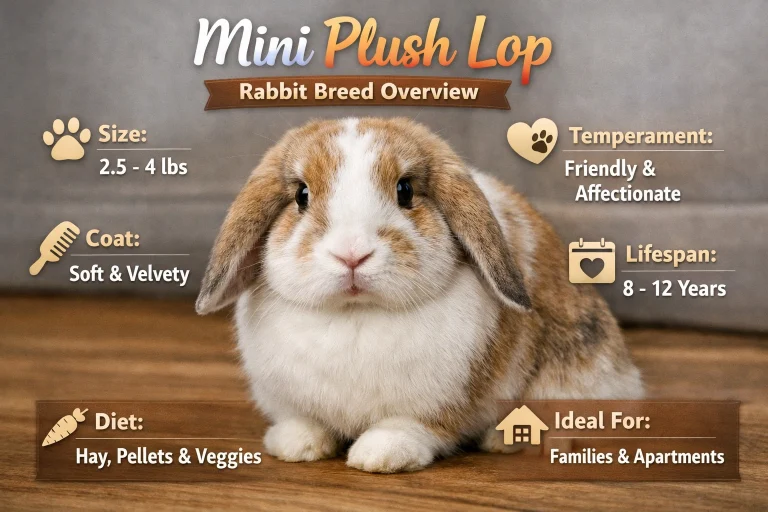
A wild rabbit like the Sumatran striped rabbit has never been selectively bred. It cannot live safely in a home. Domestic pet breeds descend from centuries of selective breeding. The Holland Lop and Flemish Giant are two familiar examples.
Wild-caught rabbits carry different health risks, stress responses and legal protections. If you’re considering a rabbit as a pet, a domestic breed is the only responsible choice.
Our Rabbit Care 101 guide covers feeding, housing and health basics for pet rabbits. For breed-specific guidance, see our profiles on the Holland Lop and Flemish Giant Rabbit.
Frequently Asked Questions
Is the Sumatran striped rabbit endangered?
The IUCN currently lists the Sumatran striped rabbit as Data Deficient, not Endangered. That status reflects a lack of population data, not a clean bill of health. Conservationists writing in Oryx in 2025 argue the species likely meets the threshold for Endangered or worse.
Can you own a Sumatran striped rabbit as a pet?
No. Indonesian law protects the species, and keeping, selling or trading one is illegal. Recent seizures in India and Thailand show the illegal trade exists anyway, which conservationists call an urgent enforcement gap.
How many Sumatran striped rabbits are left?
No one knows. The IUCN’s Data Deficient rating exists specifically because researchers have not gathered enough field data to estimate a population size or trend for this species.
Sources
- International Union for Conservation of Nature. McCarthy, J., Holden, J. & Martyr, D. (2019). Nesolagus netscheri. The IUCN Red List of Threatened Species 2019.
- Flux, J.E.C. (1990). The Sumatran rabbit Nesolagus netscheri. In Chapman & Flux (eds.), Rabbits, Hares and Pikas: Status Survey and Conservation Action Plan. IUCN/SSC Lagomorph Specialist Group.
- McCarthy, J.L., Fuller, T.K., McCarthy, K.P., Wibisono, H.T. & Livolsi, M.C. (2012). Using camera trap photos and direct sightings to identify possible refugia for the Vulnerable Sumatran striped rabbit. Oryx, 46, 438-441.
- Yoganand, K. & Tilker, A. (2025). Emerging trafficking of live striped rabbits driven by demand for exotic pets in India and Thailand. Oryx.
- Journal of Threatened Taxa. Status of the Sumatran Striped Rabbit Nesolagus netscheri in Isau-Isau Wildlife Reserve, South Sumatra Province, Indonesia.
- Scientific Reports (2025). The first complete mitochondrial genome of Sumatran striped rabbit Nesolagus netscheri, and its phylogenetic relationship with other Leporidae.