Flemish Giant Rabbit – Complete Breed Guide
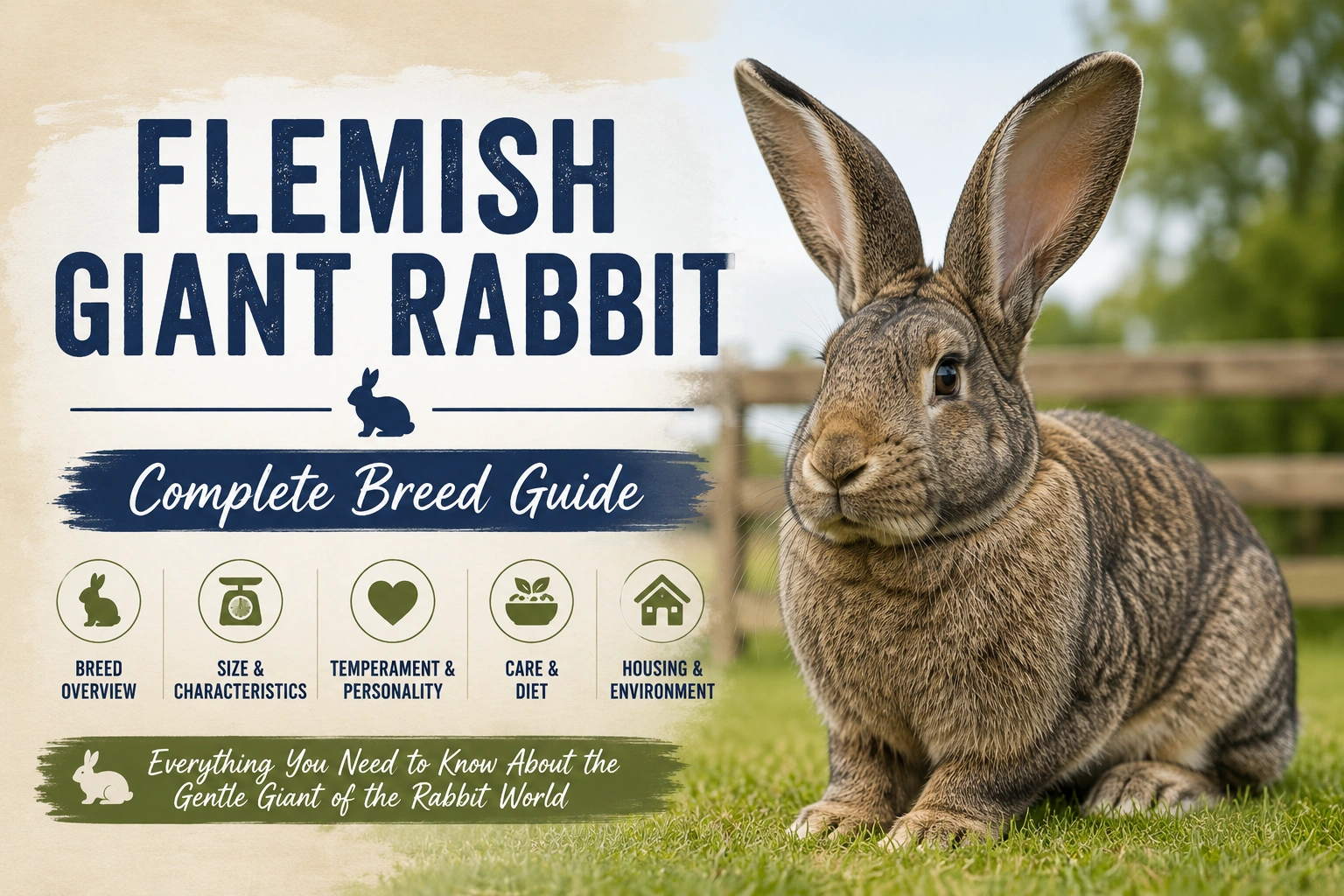
- The Flemish Giant is the largest domestic rabbit breed in the world, with adults regularly reaching 14-22 lbs and some individuals exceeding 26 lbs.
- The breed originated in Flanders (modern-day Belgium) in the 16th century and was first standardized by the National Federation of Flemish Giant Rabbit Breeders in the United States in 1915.
- Flemish Giants live 8-12 years with proper care, eat 1/4 to 1/2 cup of quality pellets daily plus unlimited timothy hay, and require a minimum enclosure of 3 ft x 4 ft – though larger is always better.
- They are one of the most docile rabbit breeds available, making them a strong match for experienced owners who have enough space and time for a large, social animal.
- A Flemish Giant from a reputable breeder costs $50-$300 depending on lineage and show quality; first-year setup costs typically run $500-$1,200.
What Is the Flemish Giant Rabbit and Why It Stands Apart from Other Breeds
The Flemish Giant is a domesticated rabbit breed recognized for its extraordinary size, calm disposition, and semi-arched body shape. Adults weigh a minimum of 14 lbs for does and 13 lbs for bucks according to the American Rabbit Breeders Association (ARBA) standard, though the typical pet-quality Flemish Giant lands between 15 and 22 lbs. The breed holds the record for the largest domestic rabbit breed by average weight, and several individual animals have exceeded 26 lbs in verified records (Guinness World Records, 2024).
The Flemish Giant is not simply a larger version of a standard rabbit. The body structure, nutritional needs, skeletal development timeline, and behavioral profile all differ meaningfully from smaller breeds. Understanding these differences is what separates owners who thrive with this breed from those who struggle.
Flemish Giant History: From Flanders to the Modern Show Table
The breed traces back to at least the 16th century in the Flemish region of what is now Belgium. Selective breeding during this period focused on producing large rabbits for meat and fur production rather than companionship.
The first written records of large rabbits in this region appear in a 1860 publication by Charles Darwin, who noted the existence of a distinct Flemish variety in his study of domestic animal variation (Darwin, C., 1868, “The Variation of Animals and Plants Under Domestication”). Belgian breeders had already established several regional strains by the mid-1800s, and European agricultural records from the 1880s describe animals matching the modern Flemish Giant description in size and coloring.
The breed arrived in the United States in the early 1890s and became a popular livestock breed within two decades. The National Federation of Flemish Giant Rabbit Breeders (NFFGRB) was established in the US in 1915 and remains active today, maintaining the official breed standard and organizing shows (NFFGRB, 2024).
By the late 20th century, the Flemish Giant had largely transitioned from a livestock breed to a show and companion animal in North America and Western Europe. Today the breed appears in seven recognized colors under the ARBA standard: black, blue, fawn, light gray, sandy, steel gray, and white.
Flemish Giant Physical Characteristics: Size, Structure, and Coat
Adult Weight and Size by Sex
The Flemish Giant is a sexually dimorphic breed. Does tend to run heavier than bucks in this breed, which is the opposite of most rabbit breeds.
| Trait | Buck (Male) | Doe (Female) |
|---|---|---|
| Minimum show weight (ARBA) | 13 lbs | 14 lbs |
| Typical pet weight range | 14-20 lbs | 15-22 lbs |
| Body length (nose to tail) | 24-30 inches | 26-32 inches |
| Ear length | 6+ inches | 6+ inches |
| Full maturity age | 18 months | 18-24 months |
Data source: American Rabbit Breeders Association Flemish Giant Standard, 2023.
Body Structure
The ARBA standard describes the Flemish Giant as a “semi-arched” type, meaning the topline rises gently from the base of the ears and arches over the hips before sweeping down to the tail. This distinguishes it from “full arch” breeds like the Checkered Giant and “commercial” body types like the New Zealand.
The hindquarters should be wide and well-muscled. Ears stand erect and are thick at the base. The feet are large and well-padded, which is medically important – Flemish Giants are more prone to sore hock (ulcerative pododermatitis) than smaller breeds because of the weight load on their rear feet.
Coat Type and Grooming Requirements
The Flemish Giant has a short to medium rollback coat. “Rollback” means the fur returns slowly to its original position when stroked toward the head. The coat is dense and glossy, and the texture is noticeably different from the more common flyback coats seen on breeds like the Rex.
Grooming requirements are moderate. Weekly brushing with a slicker brush or grooming mitt removes loose fur and reduces ingested hair. During the twice-yearly shedding season (spring and fall), daily brushing is recommended to prevent GI tract issues from excessive grooming and fur ingestion (House Rabbit Society, 2023).
Flemish Giant Temperament: What Experienced Owners Actually Report
Flemish Giants are widely regarded as one of the most manageable rabbit breeds in terms of temperament. The American Rabbit Breeders Association and the House Rabbit Society both classify the breed as calm, people-oriented, and slow to show aggression compared to smaller breeds.
Several behavioral traits stand out for experienced rabbit owners:
- Low reactivity to handling. Flemish Giants tolerate being picked up and examined more reliably than high-strung breeds like the Himalayan or Belgian Hare. Their size means they are harder for small children to mishandle, though adult supervision is still necessary given the weight.
- Social animals that do poorly in isolation. This breed needs daily interaction. Rabbits kept in isolation show increased destructive chewing, cage rattling, and stress-related GI disruption within weeks (Meredith, A. & Lord, B., “BSAVA Manual of Rabbit Medicine,” 2014).
- Does can show territorial behavior during hormonal cycles. Unspayed does may chin-mark, growl, or lunge when their enclosure is cleaned, particularly between 4 and 18 months of age. This resolves in most animals after spaying.
- Not naturally lap animals. Despite their calm nature, most Flemish Giants prefer to sit beside their owner rather than on them. They enjoy being at floor level, exploring, and nudging for attention.
- Jersey Wooly Rabbit Breed
- French Angora Rabbit: Complete Breed Guide
- The Sumatran Striped Rabbit: Facts About the World’s Rarest Rabbit
- Flemish Giant Rabbit – Complete Breed Guide
- Mini Plush Lop Rabbit: Breed Guide, Care Tips, and What to Expect in 2026
Flemish Giant Housing Requirements: Space, Flooring, and Setup
Minimum and Recommended Enclosure Sizes
The commonly cited “standard” rabbit cage sizes sold in pet stores are not adequate for a Flemish Giant. A rabbit weighing 18 lbs needs space to fully stretch out, binky (the spontaneous full-body jump that indicates happiness), and move between eating, sleeping, and toileting areas.
| Setting | Minimum Size | Recommended Size |
|---|---|---|
| Indoor enclosure (pen or cage) | 3 ft x 4 ft | 4 ft x 6 ft or free-roam |
| Outdoor hutch (with run) | 4 ft x 6 ft hutch + 6 ft x 8 ft run | 6 ft x 8 ft hutch + larger run |
| Free-roam indoor space | Full rabbit-proofed room | Multiple rooms |
Rabbit Welfare Association and Fund recommends a minimum indoor space of 3 m x 2 m x 1 m (approximately 10 ft x 6.5 ft x 3.3 ft) for large rabbit breeds as of their 2019 guidelines (RWAF, 2019).
Flooring and Sore Hock Prevention
Wire-bottom cages are a direct cause of sore hock in Flemish Giants and should not be used. The breed needs solid, non-slip flooring throughout its living space. Suitable options include:
- Rubber-backed fleece or yoga mat-style fleece pads (machine washable, soft, non-slip)
- Interlocking foam floor tiles covered with fleece
- Bare hardwood or tile with area rugs and non-slip mats
The rear feet carry the majority of body weight in a rabbit and should never be on bare wire. Any early signs of sore hock – thinning fur on the heel, redness, or callus formation – need veterinary attention promptly. Left untreated, sore hock can progress to open wounds and bone infection (Varga, M., “Textbook of Rabbit Medicine,” 2nd ed., 2014).
Temperature and Environmental Needs
Flemish Giants tolerate cold better than heat. The safe temperature range is 55-70°F (13-21°C). Temperatures above 80°F (27°C) put large rabbits at serious risk of heat stroke because their large body mass generates more heat than their relatively small ear surface area can dissipate.
Signs of heat stroke in rabbits include rapid shallow breathing, wet nose, lethargy, and red ear veins. This is a veterinary emergency with a fast progression to organ failure (Quesenberry, K. & Carpenter, J., “Ferrets, Rabbits, and Rodents: Clinical Medicine and Surgery,” 4th ed., 2020).
Flemish Giant Diet: What to Feed, How Much, and What to Avoid
The Four-Part Diet Framework
A properly fed Flemish Giant gets nutrition from four sources in the following priority order:
- Unlimited timothy hay – makes up 70-80% of total diet. Hay keeps the GI tract moving, wears down continuously growing teeth, and provides the fiber that prevents dangerous GI stasis. Orchard grass and meadow hay are acceptable alternatives or supplements.
- Fresh leafy greens – 2-4 cups per day for a 15-20 lb rabbit. Suitable options include romaine lettuce, red leaf lettuce, cilantro, parsley, basil, and arugula. Introduce new greens one at a time over 1-2 weeks to avoid digestive upset.
- High-quality pellets – 1/4 to 1/2 cup per day. For a large adult Flemish Giant, some owners use up to 3/4 cup, but pellets should supplement hay rather than replace it. Choose a plain timothy-based pellet with a minimum of 18% fiber and no added seeds, dried fruit, or colored pieces.
- Water – unlimited, fresh, and changed daily. A large rabbit drinks 300-600 ml of water per day. Both bowls and sipper bottles work; bowls tend to encourage higher intake (House Rabbit Society, 2023).
Foods to Avoid
Several foods commonly given to rabbits cause real harm at any amount or lead to problems when fed in excess:
| Food | Risk |
|---|---|
| Iceberg lettuce | Near-zero nutrition, high water content, can cause diarrhea |
| Cabbage, broccoli, Brussels sprouts | High gas-producing compounds; GI distress in sensitive animals |
| Onion, leek, chive | Toxic – causes blood abnormalities |
| Rhubarb | Toxic |
| Avocado | Toxic |
| Fruit (all types) | Acceptable as a rare treat (1-2 tablespoons maximum), not a dietary staple |
| Cereals, crackers, bread | No nutritional value; high starch disrupts gut flora |
| Nuts and seeds | High fat, indigestible hulls |
Sources: House Rabbit Society Nutrition Guide, 2023; RSPCA Rabbit Feeding Guidelines, 2023.
Feeding a Growing Flemish Giant
Flemish Giants grow for 18-24 months, significantly longer than smaller breeds that reach full size at 6-9 months. During growth:
- Feed unlimited alfalfa hay instead of timothy hay until 6 months of age. Alfalfa is higher in calcium and protein, which supports bone development.
- Switch to timothy hay at 6 months. Continue unlimited access.
- Pellets can be offered more freely (up to 1/2 cup per 6 lbs of body weight) until 12 months, then gradually reduce to adult amounts.
- Leafy greens can be introduced starting at 12 weeks, one new green at a time.
Flemish Giant Health: Common Conditions, Lifespan, and Vet Care
Expected Lifespan
A well-cared-for Flemish Giant lives 8-12 years. The average for large rabbit breeds kept primarily as companion animals is around 8-10 years, with some individuals reaching 12-13 years (British Rabbit Council, 2022).
Spaying and neutering significantly impacts lifespan. Unspayed does have a uterine cancer rate of up to 80% by age 5 in some rabbit populations (Harcourt-Brown, F., “Textbook of Rabbit Medicine,” 2002). Spaying before 2 years of age eliminates this risk.
Health Conditions Specific to Large Breeds
Flemish Giants face some health challenges that are either unique to or more common in large breeds compared to smaller rabbits:
Spondylosis and spinal arthritis. The weight load on the spine increases wear on vertebral joints over time. Signs include reluctance to binky, stiffness in the hindquarters, and reduced grooming of the rear end. Anti-inflammatory treatment and environmental modifications (lower litter box entry points, non-slip surfaces throughout) improve quality of life significantly.
GI stasis. This is the most common life-threatening condition in all domestic rabbits, but large breeds have more body mass, meaning a stasis episode can progress faster to critical dehydration. Symptoms include no fecal output for 12+ hours, a hunched posture, grinding teeth, and a very firm or very gassy abdomen. GI stasis is a veterinary emergency requiring same-day treatment (Varga, M., 2014).
Sore hock (ulcerative pododermatitis). Described above under housing. More common in Flemish Giants than in any other breed due to their weight (Meredith & Lord, 2014).
Dental disease. Rabbit teeth grow continuously throughout life. A hay-based diet is the primary prevention. Signs of molar spurs or malocclusion include reduced appetite, drooling, weight loss, and preference for soft foods. Annual veterinary dental checks are recommended after age 3.
Obesity. Flemish Giants that receive too many pellets and too little hay gain weight in a way that is hard to detect visually due to their large frame. Overweight rabbits groom less effectively and are more prone to fly strike (myiasis) in summer. A rabbit at proper weight should have ribs that are palpable but not visible.
Veterinary Care Schedule
| Age | Recommended Veterinary Actions |
|---|---|
| 8-12 weeks | Initial health check, parasite screen, discuss spay/neuter timing |
| 4-6 months | Spay (does) or neuter (bucks) – discuss specific timing with an exotic vet |
| Annually | Full physical, dental check, weight assessment |
| After age 5 | Bi-annual exams; bloodwork recommended to catch kidney and liver changes early |
A rabbit-experienced exotic veterinarian is strongly preferred over a general practice vet. General practitioners often lack the equipment and training for rabbit dental procedures, which require specific instruments and anesthesia protocols (Association of Exotic Mammal Veterinarians, 2023).
Flemish Giant Colors: The Seven ARBA-Recognized Varieties
The ARBA recognizes exactly seven colors for the Flemish Giant. Each has specific standards for shading, eye color, and undercoat.
| Color | Description | Eye Color |
|---|---|---|
| Black | Deep, glossy black throughout | Dark brown |
| Blue | Medium blue-gray, even throughout | Blue-gray |
| Fawn | Bright orange-fawn with light undercolor | Brown |
| Light gray | Agouti patterning with ticked guard hairs | Brown |
| Sandy | Golden sandy brown with ticked guard hairs | Brown |
| Steel gray | Dark steel gray with agouti ticking | Brown |
| White | Pure white throughout, no markings | Pink (albino) or blue |
Source: American Rabbit Breeders Association Standard of Perfection, 2023 Edition.
Sandy is the most commonly seen color in pet-quality Flemish Giants in the United States. Black and white are the most sought after in the show ring due to the difficulty of producing even, fault-free coloration.
How to Find a Flemish Giant Rabbit: Breeder vs. Rescue
Buying from a Breeder
A reputable Flemish Giant breeder belongs to either the National Federation of Flemish Giant Rabbit Breeders (NFFGRB) or the American Rabbit Breeders Association (ARBA), maintains health records, and allows buyers to see both the kit and at least the doe in person before purchase.
Expect to pay $50-$150 for a pet-quality Flemish Giant from a hobby breeder, and $150-$300 or more for show-quality animals. Very low prices ($20-$30) typically indicate a commercial rabbitry with little attention to health or temperament.
Questions to ask any breeder before committing:
- What is the health history of the parents?
- At what age are kits sent home? (Correct answer: minimum 8 weeks; 10-12 weeks is better for large breeds)
- Has the doe had more than two litters per year? (More than two is a welfare concern)
- Is the rabbit ARBA or NFFGRB registered?
Adopting from a Rescue
Flemish Giants appear regularly in rabbit rescues, often because first-time owners underestimate the space, cost, and lifespan involved. Adoption fees typically run $50-$100, and rescue animals are almost always already spayed or neutered.
Rescue rabbits may come with unknown health histories, but many have already been evaluated by a veterinarian and are litter-trained. For experienced rabbit owners, adoption is frequently the better choice.
The House Rabbit Society maintains a searchable rescue database at rabbit.org. The NFFGRB also lists breed-specific rescue contacts.
First-Year Cost of Owning a Flemish Giant
The startup cost for a Flemish Giant is higher than for smaller rabbit breeds, primarily because of enclosure size and food volume.
| Expense | Estimated Cost (USD) |
|---|---|
| Rabbit (pet quality, from breeder) | $50-$300 |
| Enclosure (x-pen or large cage) | $100-$250 |
| Flooring and bedding | $50-$100 |
| Litter box (oversized) | $20-$40 |
| Initial food supply (hay, pellets, dishes) | $60-$100 |
| Initial veterinary visit | $60-$150 |
| Spay or neuter surgery | $150-$400 |
| Grooming tools | $25-$50 |
| First-year total (low estimate) | $515 |
| First-year total (high estimate) | $1,390 |
Ongoing annual costs after year one run approximately $600-$1,000, driven primarily by hay ($30-$60/month for a large rabbit), veterinary care, and fresh produce.
Flemish Giant vs. Other Giant Rabbit Breeds: How They Compare
Experienced rabbit owners sometimes evaluate the Flemish Giant against other large breeds before deciding. The four most common comparisons:
| Breed | Average Weight | Temperament | Coat Type | Key Difference from Flemish |
|---|---|---|---|---|
| Flemish Giant | 14-22 lbs | Very calm | Rollback, short-medium | The standard reference for giant breeds |
| Continental Giant | 16-25 lbs | Calm | Rollback, short-medium | Larger max size; more common in Europe |
| Giant Chinchilla | 12-16 lbs | Calm | Rollback, short | Smaller; chinchilla-pattern coloring |
| British Giant | 12-18 lbs | Calm | Rollback, short | UK equivalent of the Flemish; slight structural differences |
| Checkered Giant | 11+ lbs | Active, high energy | Flyback, short | Full arch body; more active and harder to handle |
The Continental Giant and the Flemish Giant are often confused. The Continental Giant is technically a separate breed developed primarily in Germany and the UK, selects for a higher maximum weight, and is not recognized as a separate breed by ARBA (it is judged under Flemish Giant classification in the US). In the UK, the British Rabbit Council registers them as separate breeds (BRC, 2023).
Common Mistakes Flemish Giant Owners Make
- Using a wire-bottom cage. This is the single most preventable cause of sore hock. Replace any wire flooring immediately with solid, padded alternatives.
- Feeding pellets as the primary diet. Pellets should be a supplement, not a staple. A hay-primary diet is the foundation of digestive health.
- Picking up a rabbit by the scruff. Scruffing is not appropriate for domestic rabbits and can cause spinal injury in heavy animals. Always support the full body weight when lifting a Flemish Giant.
- Keeping rabbits on hard floors without non-slip mats. Rabbits that slip and scramble on hard floors sustain hindquarter injuries, including spinal fractures, which are often fatal.
- Not finding an exotic vet before an emergency. General practice vets frequently lack the knowledge and equipment for rabbit dental work and emergency GI procedures. Identify a rabbit-experienced exotic vet before you need one.
- Treating a Flemish Giant like a low-maintenance pet. This breed requires daily interaction, a large living space, a consistent hay-based diet, and regular veterinary attention. Owners who underestimate the commitment frequently surrender these animals to rescues within the first year.
Frequently Asked Questions About the Flemish Giant Rabbit
What is the average size of a Flemish Giant rabbit?
The average adult Flemish Giant weighs 14-22 lbs and measures 24-32 inches in body length. Does tend to run slightly heavier than bucks. The ARBA minimum show weight is 13 lbs for bucks and 14 lbs for does (ARBA Standard of Perfection, 2023).
How long does a Flemish Giant rabbit live?
A well-cared-for Flemish Giant lives 8-12 years. Spaying or neutering significantly increases expected lifespan, particularly in does, which face an uterine cancer rate of up to 80% by age 5 if left intact (Harcourt-Brown, F., 2002).
How much space does a Flemish Giant need?
The minimum indoor enclosure for a Flemish Giant is 3 ft x 4 ft, but this is genuinely a minimum. The Rabbit Welfare Association and Fund recommends a living space of at least 3 m x 2 m x 1 m for large rabbit breeds (RWAF, 2019). Many experienced owners free-roam their Flemish Giants in a rabbit-proofed room.
What do Flemish Giants eat?
Flemish Giants eat an unlimited supply of timothy hay as their primary diet (70-80% of total intake), 2-4 cups of fresh leafy greens per day, and 1/4 to 1/2 cup of high-quality timothy-based pellets per day. Unlimited fresh water is required at all times.
Are Flemish Giant rabbits good pets for experienced owners?
Yes. Flemish Giants are one of the calmer, more people-oriented rabbit breeds available. They do well with experienced owners who have adequate space, budget, and time for daily interaction. They are not suited for small apartments, owners seeking a low-maintenance pet, or households where the rabbit will spend most of its time alone.
How much does a Flemish Giant rabbit cost?
A pet-quality Flemish Giant from a reputable breeder costs $50-$150. Show-quality animals from breeding programs run $150-$300 or more. Adoption from a rescue typically costs $50-$100 and usually includes spay or neuter. First-year total ownership costs including setup, surgery, and ongoing supplies typically run $500-$1,400.
What health problems do Flemish Giants commonly face?
The most common health problems in Flemish Giants are GI stasis, sore hock, dental disease, spondylosis, and obesity. Uterine cancer is the primary health risk for unspayed does. Regular veterinary care with an exotic mammal specialist and a hay-primary diet prevent or detect the majority of these conditions early.
What is the difference between a Flemish Giant and a Continental Giant?
The Flemish Giant and Continental Giant are distinct breeds in the UK (registered separately by the British Rabbit Council) but classified together under the Flemish Giant standard in the US by ARBA. The Continental Giant selects for larger maximum size and is more common in European shows. In practice, the two breeds are very similar in care requirements, temperament, and coat type.
Key Takeaways for Flemish Giant Owners
- The Flemish Giant is the largest domestic rabbit breed by average weight, with adults typically reaching 14-22 lbs and a lifespan of 8-12 years.
- Hay makes up 70-80% of the diet. A hay-deficient diet is the primary cause of dental disease and GI stasis.
- Wire-bottom flooring causes sore hock. Use solid, padded, non-slip surfaces throughout the enclosure.
- Spay does before age 2. Unspayed does face uterine cancer rates up to 80% by age 5.
- Find a rabbit-experienced exotic veterinarian before an emergency occurs. General practice vets often lack the specific training this breed requires.
- The first-year cost typically runs $500-$1,400. This is not a low-cost pet.