How to Get Rid of Rabbits in Backyard: Harmless Method
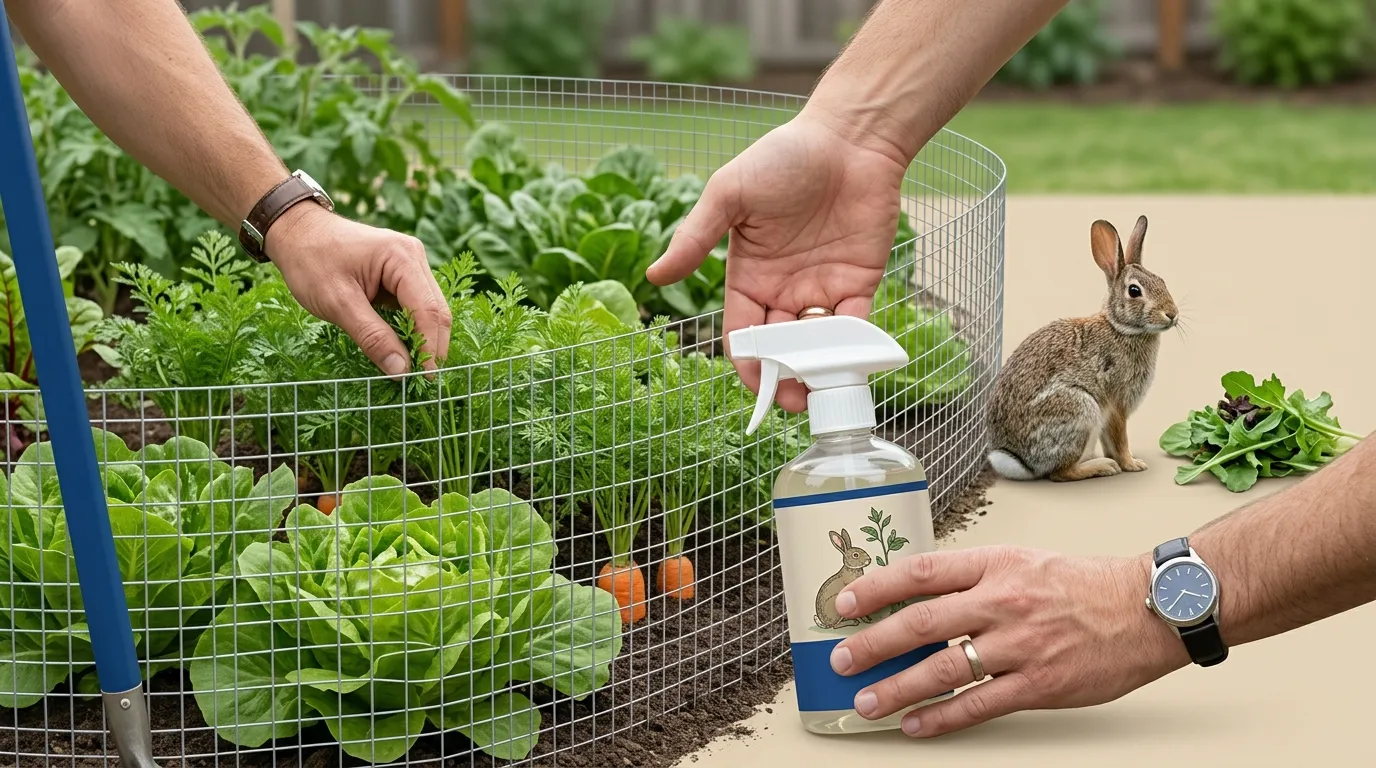
Keep rabbits out with a two-foot fence staked flush to the ground. Add scent or taste repellents on vulnerable plants. Clear the cover near your garden beds.
These steps push rabbits toward easier food elsewhere. Skip trapping and relocation. A rabbit moved to unfamiliar territory rarely survives the move.
Wild rabbits show up in yards because the yard offers food and cover. They aren’t out to destroy your garden.
Rabbit Community of America focuses on rabbit welfare. Every method below deters rabbits without harming them or putting them through a stressful trap and relocation.
What Attracts Rabbits to Your Backyard?
Rabbits gather wherever an easy meal meets quick cover. Suburban yards offer both. Garden vegetables, clover-heavy lawns and soft mulch draw rabbits in. Shrubs, wood piles and tall grass give them a place to hide.
Cottontails favor the edges of a yard. This comes from the Rabbit.org Foundation, citing material from the Humane Society of the United States. A spot where lawn meets garden bed suits them best. Open lawns and dense woods hold far less appeal.
You’ll usually spot the damage before you spot the rabbit. Look for these signs.
- A clean, diagonal cut on stems and leaves, not a ragged tear
- Small round droppings scattered near garden beds
- Bark stripped low on young trees, especially in fall and winter
- Shallow dug-out resting spots in mulch or soft soil
A ragged, torn bite usually points to deer instead. Rabbits leave a cleaner cut, since their front teeth work like scissors.
When Does Rabbit Damage Peak During the Year?
Rabbit damage peaks twice a year, once in spring and again in early winter. Spring and summer damage targets tender vegetables, flowers and new shoots. Fall and winter damage shifts to bark and twigs, once softer food disappears. Time your defenses around both peaks instead of setting them up once and forgetting them.
Check fencing and repellents in early spring, before new growth appears. Add tree guards in late fall, before the ground freezes. A little prep before each peak saves a lot of plant loss later.
How Tall Does a Rabbit-Proof Fence Need to Be?
A rabbit-proof fence needs to stand at least two feet tall. Stake the bottom flush to the ground. This single barrier protects a garden better than any repellent or scare device.
The Rabbit.org Foundation recommends two-foot chicken wire on posts set six to eight feet apart. Pin the base down so rabbits can’t push underneath it.
For larger properties, the University of California Statewide Integrated Pest Management Program recommends going taller. Their guidance calls for a fence at least three feet high, built with one-inch mesh. Bend the bottom six inches outward and bury it to stop digging.
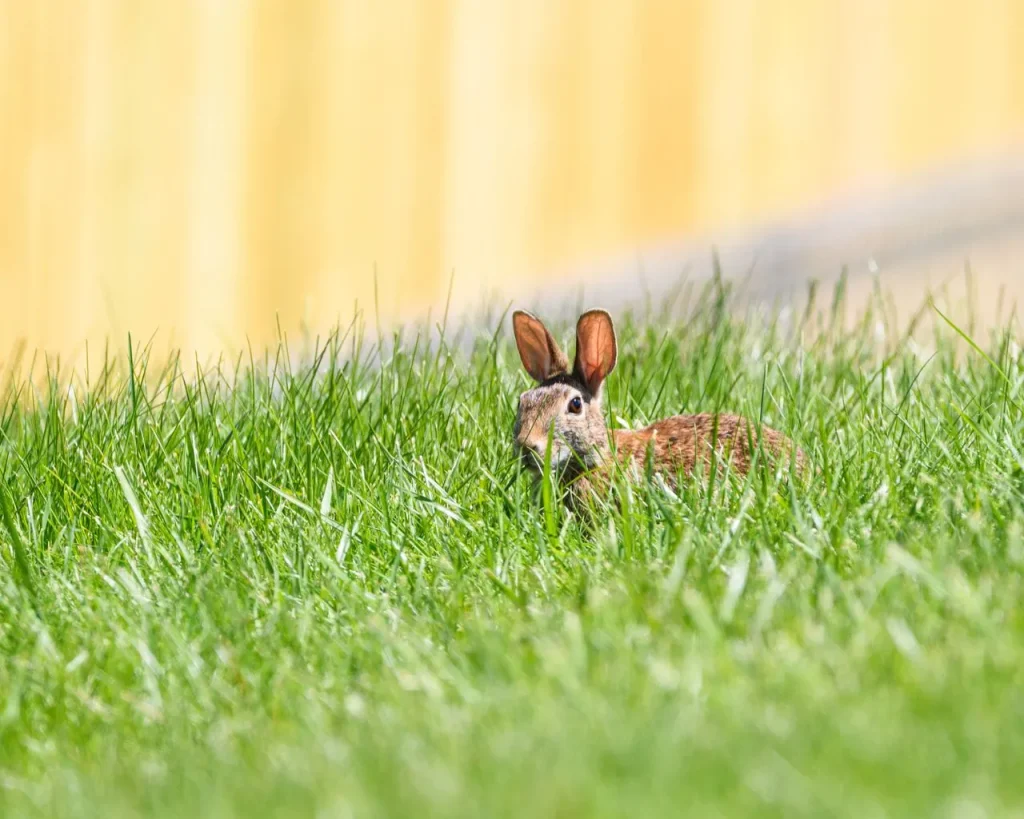
Use these three fencing options based on your setup.
- Permanent garden fence. Two to three feet of chicken wire or hardware cloth protects a bed you cover all year. Stake or bury the base so rabbits can’t get under.
- Movable panels. Wood or PVC frames wrapped in wire protect new plantings during their most vulnerable weeks. Store the panels once plants toughen up.
- Individual plant guards. A bottomless plastic jug placed over a seedling protects it. It also works as a mini greenhouse on cool spring nights.
One fence beats every repellent combined.
Plants Rabbits Usually Leave Alone
Rabbits skip plants with strong scents, fuzzy leaves or bitter sap. Working these into your beds cuts damage without any extra barrier. Marigolds, lavender and herbs like rosemary and mint tend to go untouched.
Ornamental grasses, ferns and most spring bulbs hold up well too. Tulips are the exception. Rabbits browse tulip shoots readily, so guard them separately.
Plant these rabbit-resistant options around the edges of a vegetable bed.
- Marigolds and geraniums for color that doubles as a deterrent
- Rosemary, sage, mint and lavender along a border
- Daffodils and alliums instead of tulips
- Ornamental grasses and most ferns
No plant list is bulletproof. A hungry rabbit in late winter will sample almost anything once, since food runs short then. Pair rabbit-resistant plantings with a fence around the plants you can’t afford to lose.
Repellents and Scent Deterrents That Actually Work
A repellent works best as a backup, not your main defense. Commercial repellents built on putrescent egg solids, garlic or capsaicin make plants taste bad to a rabbit. Reapply after rain, since the scent washes off fast.
Check the label before spraying any repellent near edible plants. Some products aren’t rated safe for food crops. The label will say so directly.
Homemade options can help too, though they need frequent reapplication.
- A diluted garlic or hot pepper spray on targeted leaves
- Human hair or pet fur scattered near the garden bed
- Blood meal worked into soil around ornamentals, kept away from edibles
Motion-activated sprinklers and scare tape add another layer. Rabbits get used to a single static device within days. Rotate two or three methods instead of relying on one.
Rabbit Deterrent Methods at a Glance
Compare these four approaches before you decide where to start.
| Method | Cost | Effort | Best for |
|---|---|---|---|
| Two-foot fence | Low to moderate | One-time setup | Vegetable beds and prized plants |
| Scent or taste repellent | Low | Reapply often | Gaps a fence can’t cover |
| Rabbit-resistant plants | Low | Plan once, low upkeep | Borders and mixed beds |
| Habitat cleanup | Free | Ongoing | Reducing rabbit traffic overall |
A fence solves the problem once. It only stops working if it’s damaged or left open. Repellents and plant choices need more attention through the season, but they cost less upfront.
Habitat Changes That Make Your Yard Less Inviting
Clearing brush piles, thick vine tangles and overgrown grass removes the cover rabbits need. A rabbit that feels exposed spends less time in your yard. It also eats less while it’s there.
This guidance comes from the Rabbit.org Foundation, adapted from material by the Humane Society of the United States.
Weigh this trade-off before you clear every corner of your yard. A fully tidied yard also loses value for songbirds and pollinators. Many guardians choose a middle path instead.
Open up the areas closest to vegetable beds. Leave a wilder patch farther from the house. Keeping woodpiles and dense shrubs a few feet from garden beds does most of the work.
A layer of coarse mulch or wood chips also helps. It’s less tender than exposed soil or soft new growth, so rabbits pass it by more often.
Protecting Trees and Shrubs From Rabbit Damage
Young trees need bark protection through fall and winter. Rabbits turn to woody plants once other food disappears. A cylinder of hardware cloth wrapped around the trunk blocks their teeth from reaching the bark.
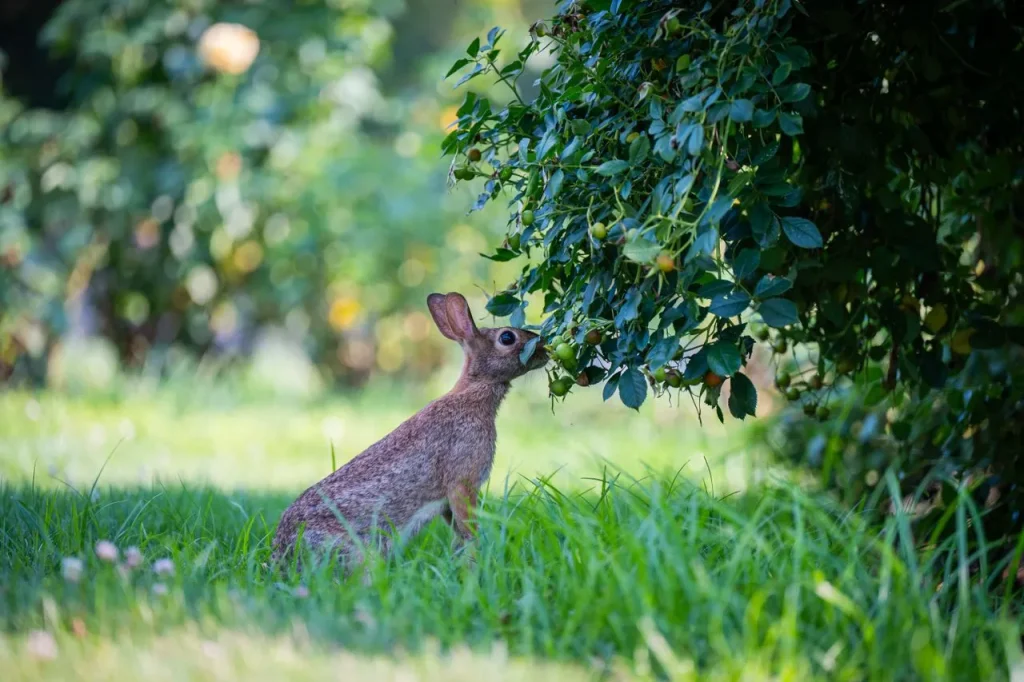
Size the guard to stand as tall as your usual snow depth. Add another eighteen inches on top of that. Rabbits can stand on packed snow to reach higher than you’d expect.
Prune a few extra branches in late winter. Leave the trimmings on the ground near vulnerable trees. Rabbits often prefer soft twigs over trunk bark, so the trimmings work as a decoy.
Fruit trees, roses and young ornamentals draw the most attention. Guard these first if your yard has several tree types.
Should You Trap or Relocate a Wild Rabbit?
Trapping and relocating a wild rabbit usually does more harm than good. A relocated rabbit lands in unfamiliar territory with no idea where food or cover sits. It also runs into resident rabbits and predators who know the terrain better than it does.
Most states regulate trapping and relocating wildlife. Many require a permit before you move an animal off your property. Rules vary by state, so check with your state wildlife agency first.
Exclusion and deterrence solve the actual problem. They stop the damage without risking an animal’s life.
If a rabbit is denning under a shed, wait for the litter to leave on its own. That usually takes a few weeks. Block the entry point once the space is empty.
What if You Find a Rabbit Nest in Your Yard?
A shallow dip in the lawn lined with fur is almost always a cottontail nest. The mother rabbit only visits at dawn and dusk to nurse. An empty-looking nest during the day is normal, not a sign she left for good.
Leave the area alone. Keep pets away from it until the babies disperse. Mow around the nest instead of over it for the few weeks the litter needs.
Cottontail babies grow fast. Most are out on their own within about a month. If a pet or mower disturbs the nest and the babies look uninjured, you can gently return them. Touching them won’t cause the mother to abandon them.
Contact a licensed wildlife rehabilitator if a baby looks injured, cold, or is covered in fly eggs. Our guide on what to do with a lost or found rabbit covers next steps. Check it if you aren’t sure an animal needs help.
A Coexistence-First Approach Protects Both Your Garden and Local Wildlife
Fencing, scent deterrents and a less cluttered yard solve most rabbit problems without harming the animal. These methods work best together.
A fence stops today’s damage. Resistant plants and repellents cover the gaps. Habitat changes keep the next generation from settling in as easily.
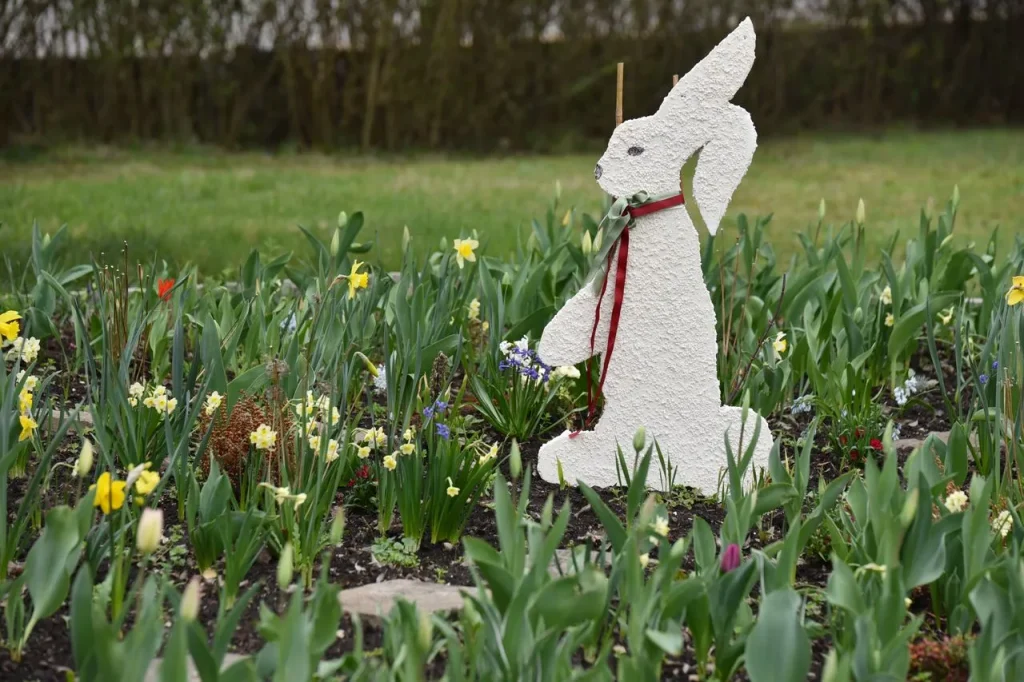
Wild rabbits also feed hawks, foxes and other predators in your local ecosystem. A few rabbits passing through don’t hurt anything. Keep them out of the vegetable bed with a simple fence. The yard still supports that wider web of wildlife, and that balance is worth protecting too.
If you’re building out your own rabbit-friendly yard, our Rabbit Care 101 guide covers the basics. Our piece on whether wild rabbits eat tomatoes digs into one specific garden question in more depth.
Frequently Asked Questions
Does human hair keep rabbits out of a garden?
Human hair scattered near vulnerable plants can work as a short-term scent deterrent. It works best paired with fencing. Rain washes the scent away fast, and rabbits get used to it if it’s your only method.
What smells do rabbits hate most?
Rabbits tend to avoid garlic, blood meal, predator urine and strong herbs like rosemary and mint. No single scent works forever. Rabbits adjust to repeated exposure, so rotate two or three deterrents through the growing season.
Will a dog keep rabbits out of my yard?
A dog that patrols the yard regularly does discourage rabbits from settling in. Coverage gaps remain during the hours your dog stays inside. Pair a dog with fencing around any beds you can’t afford to lose.
Do rabbits come back to the same yard every year?
Yes, cottontails often stay within a small home range for life if the food and cover keep holding up. Removing the cover and fencing the food source breaks that pattern. A one-time scare tactic won’t.
Is it cruel to use rabbit repellent spray?
Commercial repellents work through taste and scent, not pain, so they don’t harm the rabbit. Check the label before using any repellent near food crops. Not every product is rated safe for plants people plan to eat.
Is that rabbit in my yard actually someone’s lost pet?
Domestic rabbits are usually bigger than cottontails. They also come in colors wild rabbits never have, like solid white or black and white patches. A domestic rabbit also won’t bolt at first sight of you the way a wild cottontail does. If you suspect a lost pet, contact a local rescue instead of treating it as a nuisance animal.