What is the Best Hay for Holland Lop Rabbits?
Timothy hay is the best daily hay for a Holland lop. It’s the staple the House Rabbit Society recommends, since grass hay carries vitamin A and D along with calcium, protein, and other nutrients your rabbit needs, and it keeps a rabbit’s teeth and gut working the way they should. Offer it without limit, every day, for your Holland lop’s whole adult life.
Why Timothy Hay Is the Best Daily Hay for Holland Lops
Timothy hay gives your Holland lop the fiber its small body needs to keep digestion moving. A rabbit’s gut never stops. It needs constant fiber flowing through it to avoid the slowdown that leads to GI stasis.
Timothy also wears down your rabbit’s teeth. Holland lop teeth grow continuously, just like every other rabbit breed’s. Chewing tough grass hay all day files those teeth down evenly, so they never grow into painful spurs.
Size doesn’t change any of this. A Holland lop weighs a fraction of what a Flemish giant weighs, but its digestive system runs on the same rules. Small body, same hay math.

Timothy Hay for Rabbits
- Made with hand-selected Timothy hay for digestive health
- Contains prebiotics and probiotics
- Supports dental health through natural chewing
- No loose seeds or sugary fruits
- No artificial preservatives or fillers
- Backed by Kaytee’s 150+ years of small-animal nutrition expertise
How Much Hay Your Holland Lop Needs Every Day
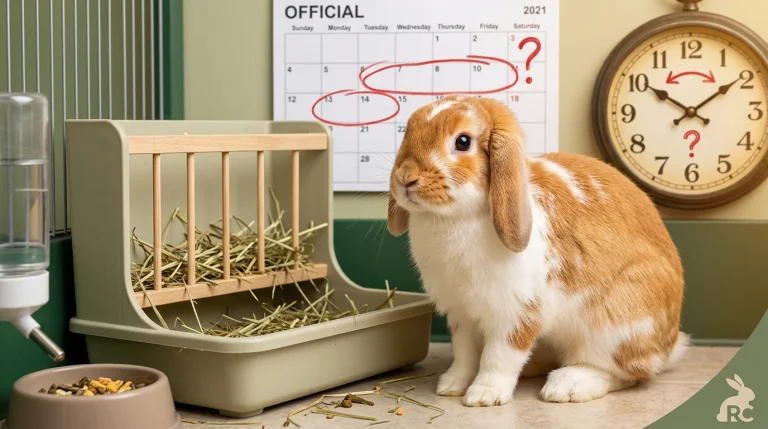
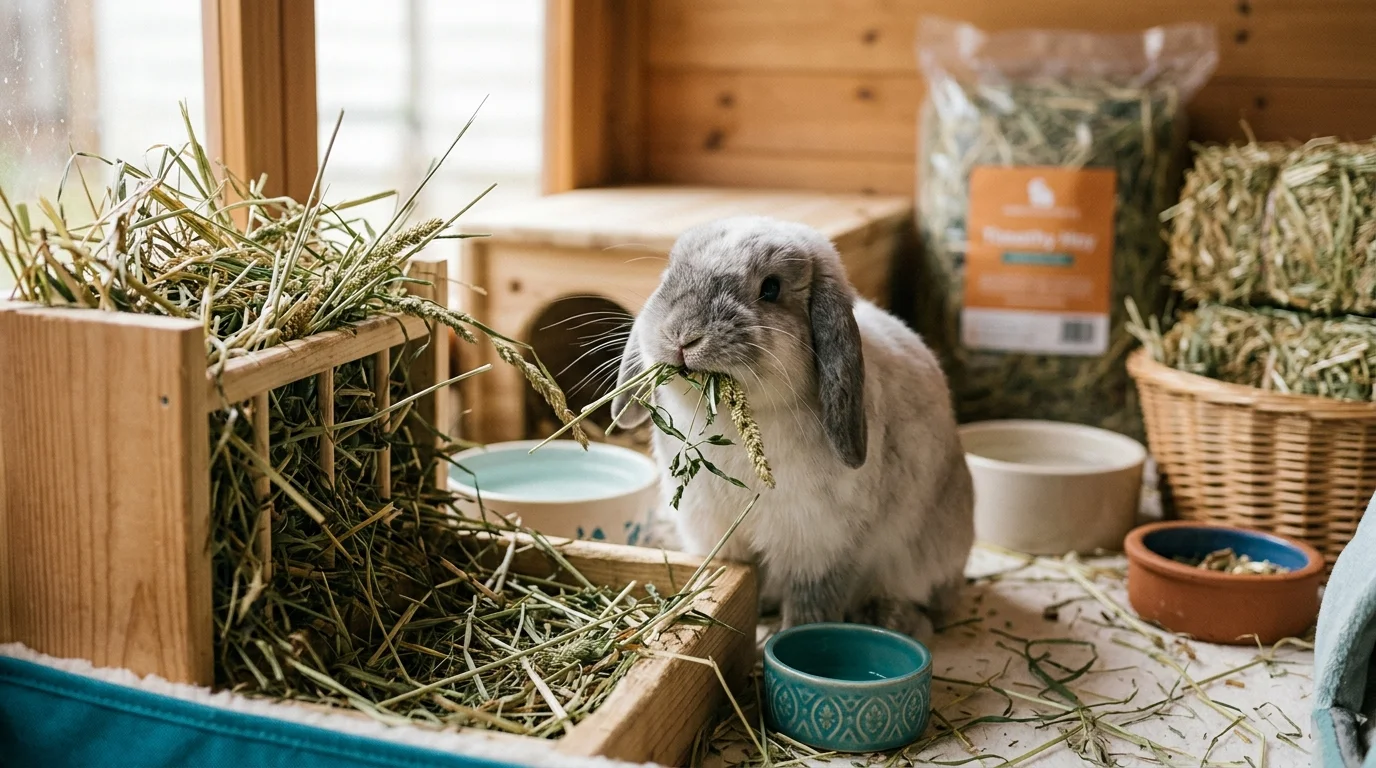
Your Holland lop needs access to hay at all times, not a measured ration once a day. Rabbits graze in short bursts throughout the day and night, and an empty hay rack leaves that gut sitting still for hours.
Refill the hay bin before it runs dry. A good habit is checking it morning and night, then topping it off any time you walk past an empty spot.
Pack hay into more than one place. A rack by the litter box, a pile in a favorite corner, and a stuffed toy or tunnel all give your Holland lop reasons to nibble as it moves around its space.
When Alfalfa Hay Makes Sense for a Holland Lop
Alfalfa hay isn’t the right daily staple for an adult Holland lop. Alfalfa carries more calcium and protein than a grown rabbit needs, while timothy stays the better everyday choice for adults. Too much calcium over months can contribute to bladder sludge later on. houserabbitga
Kits under six months old are the exception. A young, growing Holland lop can handle the extra protein and calcium in alfalfa while its body is still building bone and muscle.
Once your Holland lop crosses into adulthood, taper the alfalfa out. Some guardians keep a small amount on hand as an occasional treat, but timothy or another grass hay should carry the daily load.
Other Hay Types to Rotate In for Variety
A Holland lop that gets bored of one hay often eats less of it overall. Rotating in a second or third grass hay keeps interest up and keeps the bin from going untouched.

Timothy Hay for Rabbits
- Made with hand-selected Timothy hay for digestive health
- Contains prebiotics and probiotics
- Supports dental health through natural chewing
- No loose seeds or sugary fruits
- No artificial preservatives or fillers
- Backed by Kaytee’s 150+ years of small-animal nutrition expertise
Orchard grass is a common swap. It’s softer and a little sweeter than timothy, and many rabbits that turn their nose up at timothy will still dig into orchard grass without hesitation.
Consider mixing in a few options for your Holland lop:
- Orchard grass, for a softer texture and sweeter taste
- Oat hay, for extra texture and a coarser chew
- Meadow hay, for a varied blend of grasses in one bag
Keep the mix mostly grass hay. Variety helps, but the goal stays the same: unlimited grass hay, every day, for the life of your rabbit.
How to Tell When Hay Has Gone Bad
Fresh hay smells sweet and grassy, almost like fresh-cut lawn. That smell fades fast once hay goes stale, so a musty or flat smell is your first warning sign.
Look before you smell, too. Toss any hay that feels damp, looks dusty, or has visible mold spots. Moldy hay can make your Holland lop sick, and it’s never worth the risk of feeding it anyway.
Buy hay in amounts you’ll use within a month or two. A huge bag that sits half-used for months loses freshness fast, especially if it’s stored somewhere humid.
What to Do When Your Holland Lop Won’t Eat Hay
A Holland lop that skips hay and heads straight for pellets or treats needs a course correction. Pellets are calorie-dense and filling, so a rabbit that fills up on them has no room left for hay.
Cut back on pellets first. Most adult rabbits need only a small daily portion, and trimming that amount often brings hay interest right back.
Try a hay switch next. If your rabbit ignores timothy, offer orchard grass or oat hay instead. Some rabbits are picky about texture, and a different cut solves the problem overnight.
Make hay part of play, too. Stuff a cardboard tube with hay, hide a few pellets inside a hay pile, or pack a hay ball for your rabbit to push around. A Holland lop that forages for its hay often eats more of it than one staring at a plain pile in a bowl.
Quick Answers About Holland Lop Hay
Can Holland lops eat the same hay as bigger rabbit breeds?
Yes. Timothy hay and other grass hays work the same way for every rabbit breed, regardless of size. A Holland lop needs the same unlimited daily access to hay that a much larger rabbit needs.
Is alfalfa hay ever safe for an adult Holland lop?
A small amount as an occasional treat is generally fine. Daily alfalfa isn’t recommended for adults because of its higher calcium and protein content, which suits growing kits more than grown rabbits.
How do I keep hay fresh in a humid climate?
Store hay in a breathable container, away from direct sun and moisture. Buy smaller amounts more often instead of one large bag that sits for months in damp air.
For more on setting up your Holland lop’s daily routine, see Rabbit Care 101 and the full Holland Lop breed profile. If you’re also working out vegetables, Veggies for Holland Lops covers the rest of the daily diet.