Can Rabbits Eat Cilantro? What You Need to Know?
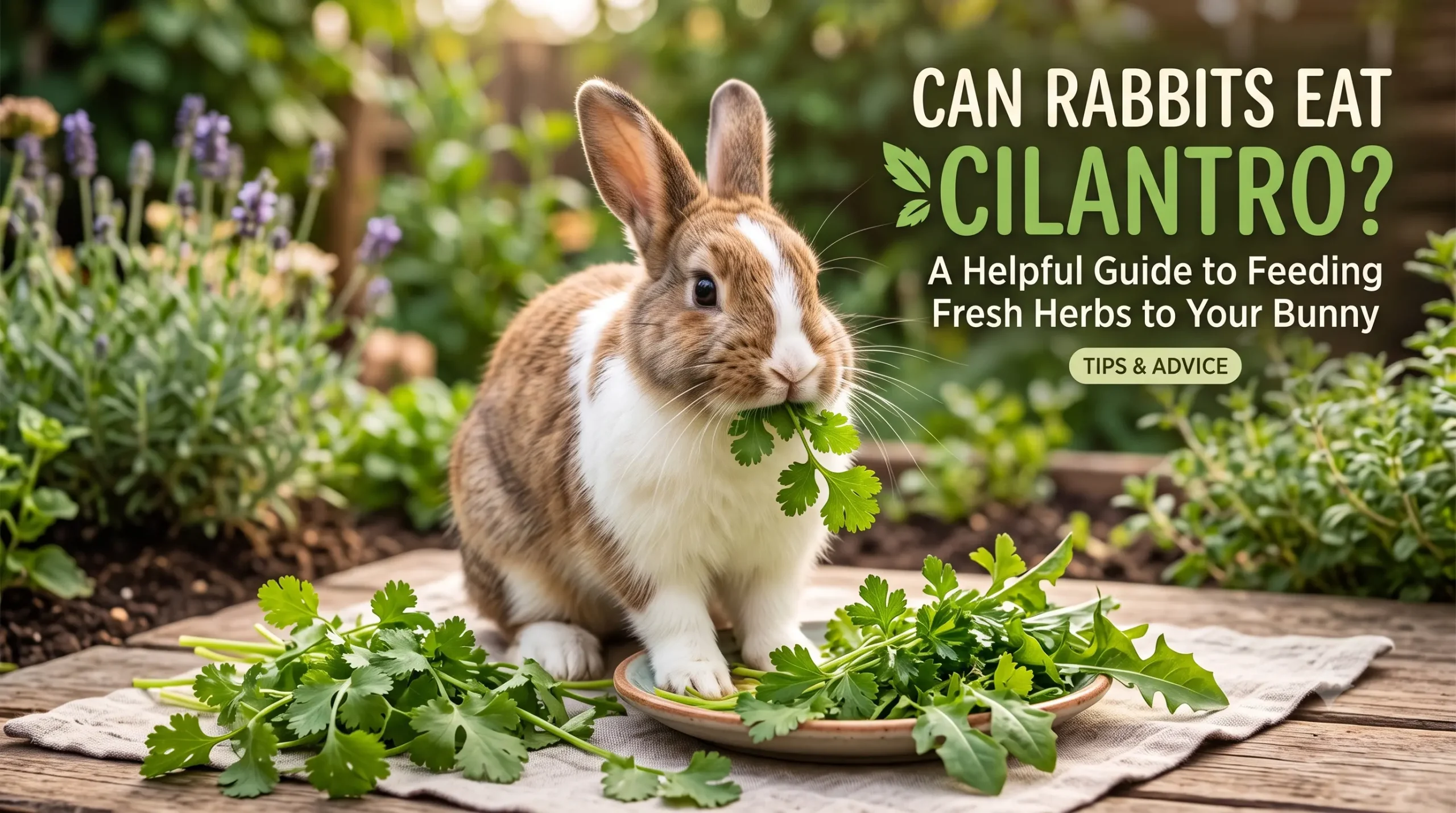
Yes, rabbits can eat cilantro. Cilantro among the safe leafy greens for a rabbit’s fresh food mix. Offer it fresh, washed and rotated with other greens. Cilantro stays a supporting player next to unlimited hay, never the main event.
Is Cilantro Safe for Rabbits?
Cilantro is safe for healthy adult rabbits. House Rabbit Society includes it on its list of leafy greens suitable for a rabbit’s daily diet, alongside herbs like basil, dill and cilantro’s relative, parsley.
Your rabbit’s gut runs on fiber and routine. A new green like cilantro should join the rotation slowly, not replace what your rabbit already eats. Watch your rabbit’s droppings and appetite for the first day after any new food.
If your rabbit has an ongoing digestive condition, check with your exotics vet before adding cilantro. A vet who treats rabbits regularly can flag anything specific to your rabbit’s history.
How Much Cilantro Can a Rabbit Eat?
A small handful of cilantro fits into one feeding. Leafy greens like cilantro should make up most of your rabbit’s fresh vegetable portion, with room for other greens like the mix in our veggies for Holland Lops guide.
Pair cilantro with two or three other leafy greens rather than serving it alone. Variety spreads out any single plant’s compounds and keeps your rabbit’s diet balanced. For the full daily breakdown of hay, greens and pellets, see our guide on what rabbits can eat daily.
Weigh your rabbit’s regular greens portion against its body size. A larger rabbit, like a Flemish Giant, handles more fresh food than a small breed such as a Netherland Dwarf.
How Often Should You Feed Cilantro?
Cilantro works best as one green among several, not a daily solo dish. Rotate it with other rabbit-safe herbs and leafy greens through the week so your rabbit gets a wider nutrient spread.
This rotation habit also protects against any single plant’s natural compounds building up. House Rabbit Society recommends rotating high-oxalate greens for the same reason, and cilantro fits comfortably into that same rotating mix.
What Parts of the Cilantro Plant Are Safe?
The leaves and stems are the parts to feed. Wash both under running water for a full two minutes before serving, per House Rabbit Society’s guidance on produce safety.
Skip the roots. The root holds a much stronger concentration of the plant’s essential oils than the leaves or stems, and that concentration can upset a sensitive stomach.
Skip the seeds too. Coriander seeds are the dried fruit of the cilantro plant, and they carry fat and essential oils out of proportion to any benefit for your rabbit.
Cilantro flowers are a smaller question mark. Some guardians report their rabbit enjoys the blooms without issue, but the leaves and stems remain the reliable, well-tested choice.
Benefits of Cilantro for Rabbits
Cilantro brings real nutrition to the table, not just novelty. Here’s what a serving offers your rabbit:
- Vitamin A and vitamin K, both useful for a rabbit’s vision and blood health
- Water content that adds hydration alongside your rabbit’s water bowl
- A fragrant, tender texture most rabbits accept readily, even picky eaters
- Variety in your rabbit’s rotation, which supports gut health over time
None of this replaces hay. Hay still needs to make up the bulk of your rabbit’s diet, with cilantro and other greens filling a smaller, supporting role.
Risks and Warning Signs to Watch For
Overfeeding any single green can slow your rabbit’s gut down. If cilantro crowds out hay in your rabbit’s bowl, the drop in fiber can contribute to gastrointestinal stasis, a serious and sometimes life-threatening condition.
Watch for soft stool, fewer droppings than usual or a rabbit that stops eating. Any of these signs after a new food means the food comes out of rotation and a call to your vet goes on the calendar.
A rabbit with bladder sludge or a history of digestive trouble needs a vet’s input before any new green joins the mix, cilantro included.
Can Baby Rabbits Eat Cilantro?
Not yet. Baby rabbits under twelve weeks old need to stay on their mother’s milk and pellets while their digestive system finishes developing. Fresh vegetables, cilantro among them, come later.
Once your rabbit passes the twelve-week mark, introduce cilantro the same slow way you would with any adult rabbit. Small amounts first, then watch how your rabbit’s stomach handles it.
How to Introduce Cilantro to Your Rabbit
Start with one or two stems, leaves included. Offer this alongside your rabbit’s usual greens rather than on its own, so a reaction is easier to trace back to the new food.
Wait a full day before offering cilantro again. A rabbit’s gut needs time to show whether a new food agrees with it, and rushing the process defeats the purpose of introducing slowly at all.
Once your rabbit tolerates cilantro without soft stool or appetite changes, fold it into the weekly rotation described above. From there, cilantro becomes one more reliable option in your rabbit’s fresh food lineup, alongside the safe fruits covered in our cantaloupe and kiwi guides.
For the full picture of building a balanced routine from day one, our Rabbit Care 101 guide walks through hay, pellets and fresh food together.
Cilantro FAQs
Can rabbits eat cilantro every day?
Cilantro is safe but works better as part of a rotation than a daily fixture. Feeding the same green every day narrows your rabbit’s nutrient mix. Rotate cilantro with two or three other rabbit-safe greens through the week instead of offering it every single day.
Can rabbits eat cilantro stems?
Yes, cilantro stems are safe alongside the leaves. Wash the stems the same two minutes recommended for the leaves before serving. Most rabbits eat the stem and leaf together without any sorting, so there is no need to separate them before feeding.
Can rabbits eat cilantro and parsley together?
Yes, cilantro and parsley can share a bowl. Both sit on House Rabbit Society’s safe leafy green list, and mixing herbs adds variety to a single feeding. Keep the combined portion within your rabbit’s normal fresh food allowance rather than doubling the amount because two herbs are involved.
Can rabbits eat cilantro flowers?
Cilantro flowers are less tested than the leaves and stems, though some guardians report no issues. If your cilantro plant flowers, offer a small amount first and watch your rabbit’s stool for a day. Stick with leaves and stems as the default, reliable choice.
Can rabbits eat cilantro leaves?
Yes, cilantro leaves are the main part of the plant to feed and the part House Rabbit Society lists as safe. Wash them thoroughly and serve fresh. Leaves are the most tender part of the plant and the part most rabbits accept without hesitation.
Can rabbits eat cilantro roots?
No, skip the cilantro root. The root carries a much stronger concentration of essential oils than the leaves or stems, and that concentration can upset your rabbit’s digestion. Trim the root away before serving and feed only the leaf and stem portion.
Can rabbits eat cilantro seeds?
No, coriander seeds are best left out of your rabbit’s diet. The seeds are the dried fruit of the cilantro plant and carry more fat and essential oils than a rabbit needs. A rabbit’s diet works best built on hay and leafy greens, not seeds.
Can rabbits eat cilantro macho?
Cilantro macho, also called culantro, is a different plant from garden cilantro despite the similar name and flavor. Because it is a separate species with its own compounds, do not assume it carries the same safety profile. Check with your exotics vet before offering culantro to your rabbit.