The 3-3-3 Rule for Rabbits: What It Means and How to Use It
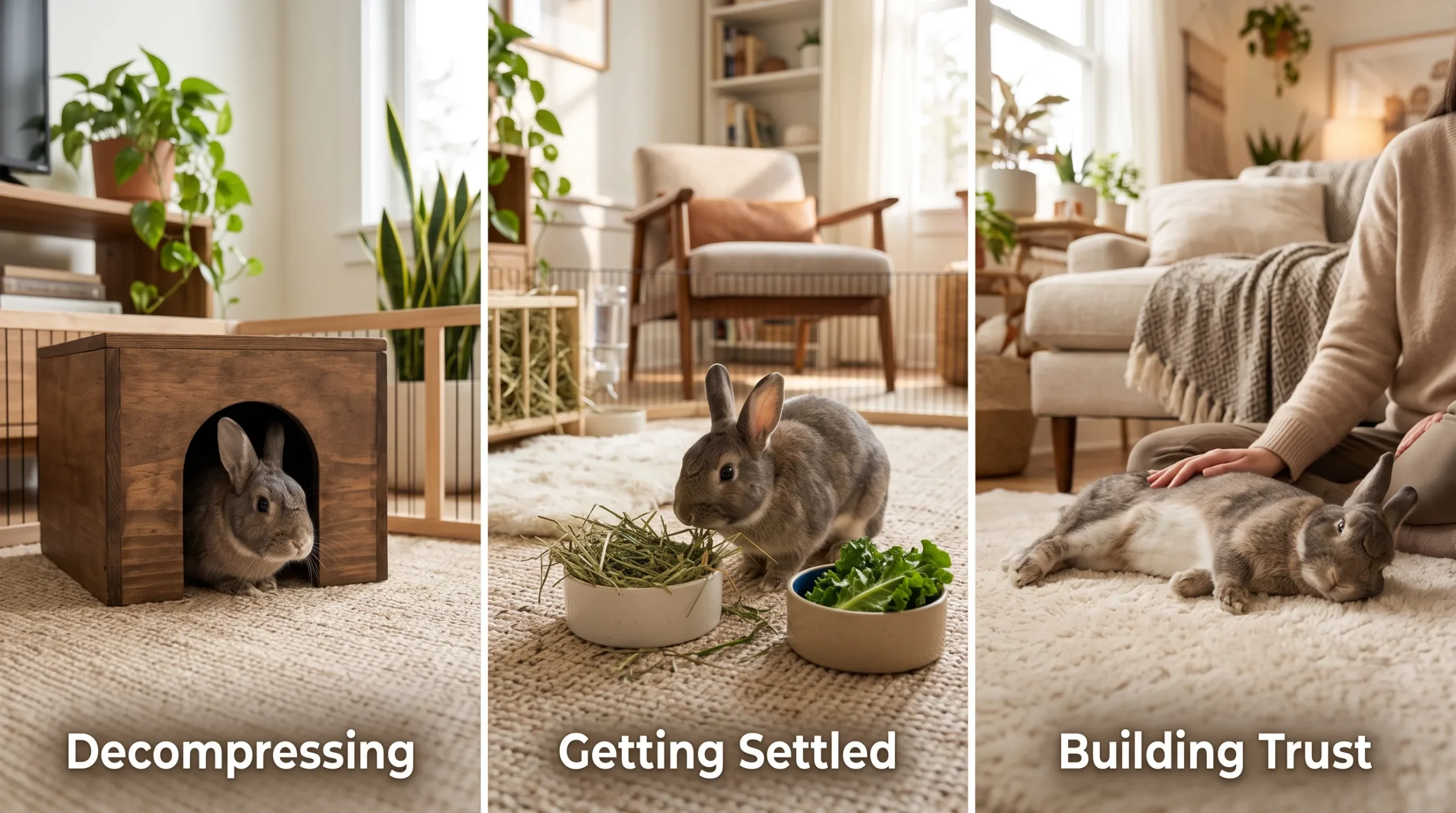
The 3-3-3 rule for rabbits is a timeline for adjustment after adoption. It breaks the settling-in period into three days, three weeks and three months. Your rabbit decompresses in the first three days, starts showing its real personality by three weeks and feels fully at home by three months.
What Is the 3-3-3 Rule for Rabbits?
The 3-3-3 rule is a guideline, not a guarantee. It tells you what to expect at three stages after you bring a rabbit home. House Rabbit Society uses this exact framework in its adoption guidance, and shelters and rescues across the country repeat it for good reason. Rabbits are prey animals. A new home means new smells, new sounds and no familiar hiding spot, so the nervous system takes time to catch up.
Some rabbits move through the stages faster. Others take longer, especially rabbits with a rough history before the shelter. Treat the timeline as a rough map, not a deadline your rabbit has to hit.
The First 3 Days: Decompression
Your rabbit spends the first three days processing shock, not meeting you. Expect a rabbit that hides, freezes or thumps at ordinary sounds. This is not rejection. It’s a prey animal deciding whether the new space is safe.

Watch for these signs during this window:
- Hiding in a box, corner or under furniture for long stretches
- Refusing food or eating far less than usual
- Territorial droppings scattered near the cage or pen
- Startling at footsteps, doors or other pets
- Little or no interest in being touched
Give your rabbit a quiet room, a hide box and food it recognizes from the shelter. Skip the urge to pick it up or introduce it to the whole family on day one. Let it choose when to come out.
The First 3 Weeks: Personality Emerges
By the second and third week, your rabbit starts testing the space instead of just surviving it. You’ll see more movement around the room and less freezing at small noises. This is when the actual personality, playful, bossy, cuddly or independent, starts to show through.
Litter habits usually settle in this window too. If accidents are still frequent past week three, litter training may need a more deliberate approach rather than more patience.
Keep the routine boring on purpose. Feed at the same times. Use the same voice when you enter the room. Predictability is what turns “new place” into “my place” in a rabbit’s mind.
The First 3 Months: Trust and Routine
By month three, most rabbits treat the home as their territory. You’ll see binkies, flops and the kind of relaxed lounging a scared rabbit never risks. Your rabbit should now approach you instead of only tolerating your approach.

This is also when bonding with other pets or rabbits becomes realistic, if that’s part of your plan. A rabbit that’s still hiding constantly at month three hasn’t failed the timeline. It’s telling you something needs to change, whether that’s more space, a calmer household or a vet visit to rule out pain.
If your household includes another rabbit and you’re timing an introduction, wait until this settling phase is well underway. A stressed rabbit that hasn’t decompressed yet has less patience for a new roommate, which is also worth knowing if you’re wondering whether rabbits get lonely enough to need one.
How to Support Your Rabbit Through Each Phase
A few habits carry a rabbit through all three stages without you having to guess what week it’s in.
- Keep the cage or pen in the same spot. Moving it resets the adjustment clock.
- Talk before you reach. A rabbit that hears you coming startles less than one that gets grabbed from behind.
- Offer hay constantly, not on a schedule. It’s both nutrition and a stress reliever.
- Let your rabbit initiate contact when possible. Sit on the floor at its level and wait.
- Track eating and litter habits daily. A sudden change is the clearest early warning sign you have.
None of this speeds up the timeline. It just makes the three stages easier on the rabbit going through them.
When to Worry: Signs the Adjustment Isn’t Going Well
Some behavior looks like normal decompression but isn’t. Call your vet if your rabbit stops eating for more than 12 hours, since rabbit digestion can shut down fast enough to become an emergency. Extreme lethargy, labored breathing or a rabbit that never relaxes even after week three also warrants a call rather than more waiting.
Fear that never fades is different from fear that’s fading slowly. If you can’t tell which one you’re watching, a vet visit costs you an appointment. Waiting too long can cost your rabbit its health.
For a broader walkthrough of what a new rabbit needs in the first weeks, Rabbit Care 101 covers setup, diet and handling basics alongside this adjustment timeline.
Frequently Asked Questions
What does the 3-3-3 rule mean for rabbits?
The 3-3-3 rule means three days to decompress, three weeks to start settling in and three months to feel fully at home. It’s a general timeline for how long adjustment takes after adoption, not a fixed deadline every rabbit follows exactly.
How long does it take a rabbit to adjust to a new home?
Most rabbits show real comfort by the three-month mark, with personality emerging as early as three weeks. Rabbits with a difficult shelter history or an especially nervous temperament can take longer, and that’s normal.
Is it normal for a new rabbit to hide for days?
Yes. Hiding for the first few days is one of the most common signs of decompression. A rabbit that hides but still eats and uses the litter box is adjusting normally. Refusal to eat at all needs a vet call.
Should I handle my rabbit a lot during the first week?
No. Minimal handling in the first week lets your rabbit build trust at its own pace. Sit near it, talk to it and let it approach you rather than picking it up repeatedly.