Best Hay for Rabbits with Allergies: Safe Alternatives and Relief Tips
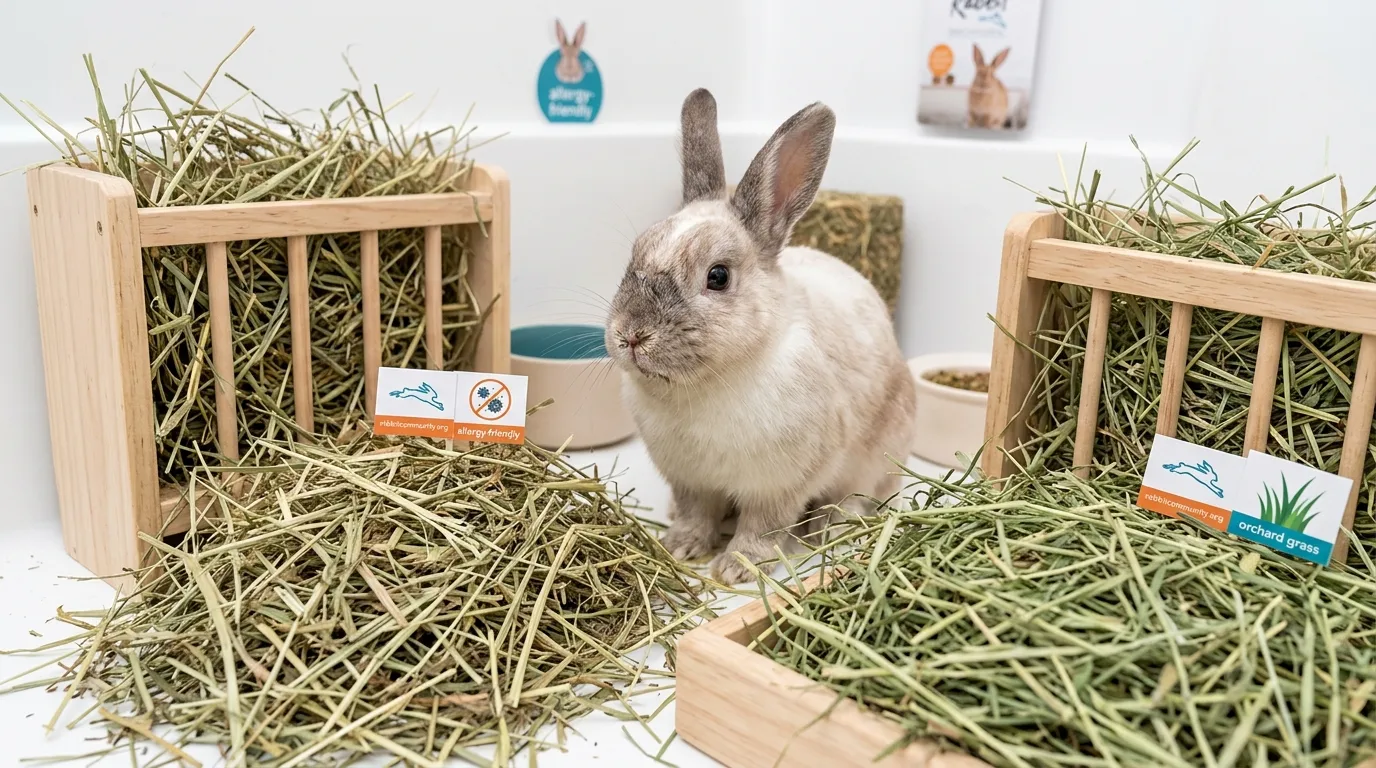
Orchard grass works best for most households where a person or a rabbit reacts to grass hay. It gives your rabbit the long-stem fiber its gut needs. Many owners who react to Timothy hay find Orchard grass easier to breathe around, because it carries less loose dust.
Why Timothy Hay Triggers Allergies?
Timothy hay sheds dust, mold spores, and pollen during harvest and packing. That dust rides along in every flake you pull from the bag. It lands on your hands, your rabbit’s fur, and the air around the hutch.
For allergic owners, that dust means sneezing, watery eyes, and skin irritation. For sensitive rabbits, it can mean watery eyes and labored breathing. The House Rabbit Society notes that hay quality varies by batch and cut, and that dusty or moldy hay carries its own health risk for the rabbit regardless of allergies.

Your rabbit still needs unlimited grass hay even with an allergy in the house. Hay wears down constantly growing teeth. It also keeps the gut moving, and a rabbit’s gut can slow down fast without enough fiber. Cutting hay is not a safe fix. Switching the type of hay is.
This is the balance every allergic household has to strike. You cannot remove hay to protect your own breathing. You can change which grass fills the rack, how it’s stored, and how it’s handled at feeding time. Those three changes solve most of the problem without asking your rabbit to go without.
Top Hay Alternatives for Allergy-Prone Households
The House Rabbit Society lists Timothy, Orchard, oat, brome, and several other grasses as acceptable staple hays for rabbits, and recommends offering more than one type for variety. That range gives you room to find a hay your household can tolerate.
Orchard grass. Orchard grass has a softer texture than Timothy hay. Many rabbit owners who react to Timothy report fewer symptoms after switching to Orchard, based on years of accounts shared in rabbit-owner communities. Nutritionally, Orchard grass runs high in fiber and moderate in protein, so it works as a direct swap for Timothy.

Meadow hay. Meadow hay blends several soft grasses in one bale. The mixed texture tends to feel gentler going in and out of the bag than a single coarse grass. Its nutrient content varies by batch, but it stays high in fiber and rabbits often enjoy foraging through the mix.

Oat hay. Oat hay has thicker stems that hold less fine dust than Timothy. It also carries seed heads, so skip it if anyone in the house reacts to oats specifically. Oat hay runs higher in calories, which makes it useful for a rabbit that needs to hold or gain weight.

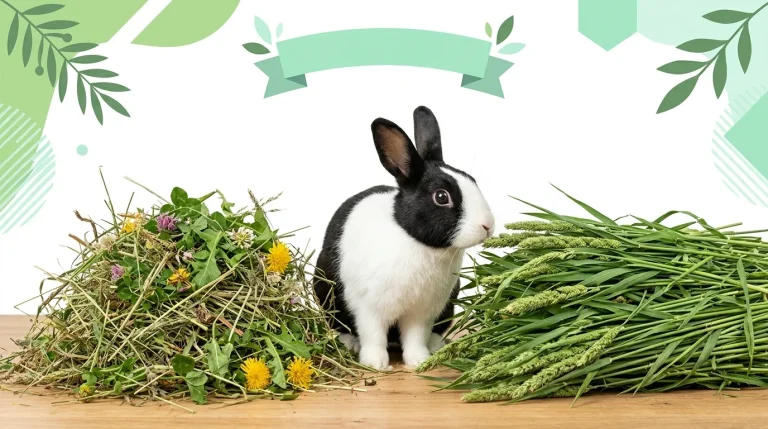
Botanical hay blends. These blends start with a low-dust Orchard grass base and add dried herbs like chamomile or dandelion. The herbs boost palatability without adding the extra dust that flavor sprays or pellets can bring.
Alfalfa hay does not belong on this list as a daily staple. Alfalfa is a legume, not a grass, and it runs high in calcium and protein. The House Rabbit Society reserves alfalfa for young, growing, pregnant, or nursing rabbits, not for adult rabbits on an everyday diet.
Comparing the Options at a Glance
| Hay Type | Dust Level | Allergen Risk | Fiber Content | Rabbit Palatability |
|---|---|---|---|---|
| Timothy | High | High | Excellent | High |
| Orchard grass | Low to moderate | Low | Excellent | Very high |
| Meadow hay | Low | Low | Good | High |
| Oat hay | Moderate | Moderate | Good | Moderate |
Dust and allergen levels vary by supplier, cut, and storage, so treat this table as a starting point rather than a guarantee. Order a small bag before committing to a bulk order of any new hay.
How to Cut Hay Allergies at Home?
Storage matters as much as the hay itself. An open cardboard box lets dust settle across the room every time the rabbit digs through it. Move your hay into an airtight bin or a sealed canvas hamper instead.
Handling habits make the next difference. Try these changes at feeding time:
- Wear a dust mask and gloves when you portion hay
- Use tongs to move hay instead of your bare hands
- Feed hay from a covered or enclosed rack so it stays contained
- Run a HEPA air purifier near the enclosure, not across the room
Quality control closes the loop. Compressed hay and second or third cutting hay both tend to run softer, greener, and cleaner than a coarse first cutting bale. Ask your supplier which cutting you are buying, since bags do not always say.
Location inside your home matters too. Keep the hay bin and the enclosure in a room with a door you can close, rather than an open living space. That single change stops dust from drifting into bedrooms and shared areas where you spend the most time.
Where to Buy Low-Dust Hay?
We are not able to confirm a live, in-stock Amazon listing for you here, since product pages and prices change constantly and we cannot verify a link is still accurate at the moment you click it. Search Amazon directly for “Oxbow Orchard Grass Hay,” “Small Pet Select Orchard Grass,” or “Oxbow Oat Hay” to compare current bag sizes and prices. Oxbow and Small Pet Select both sell Orchard grass, Meadow hay blends, and Oat hay in sizes from small trial bags to bulk boxes.
Frequently Asked Questions
Can rabbits be allergic to their own hay?
Rabbits can develop respiratory irritation from dusty or moldy hay, even without a true allergy. Watch for sneezing, a runny nose, or discharge around the eyes. Any of these signs means it’s time to switch hay or check your storage method.
Is alfalfa hay good for allergic owners?
Alfalfa is a legume, not a grass, and some owners find it less dusty than grass hays. It still runs too rich in calcium for daily feeding to an adult rabbit. Save alfalfa for young, growing, pregnant, or nursing rabbits only.
How can I reduce dust in hay I already own?
Shake each flake outdoors or inside a pillowcase before you put it in the enclosure. You can also mist the top layer lightly with water to settle dust. Avoid soaking the hay, since damp hay molds fast.
The Bottom Line
Your rabbit needs unlimited grass hay no matter who in the house has allergies. Orchard grass gives most allergic households the easiest switch from Timothy. Pair the right hay with better storage and handling, and you can keep the sneezing down without cutting corners on your rabbit’s diet.